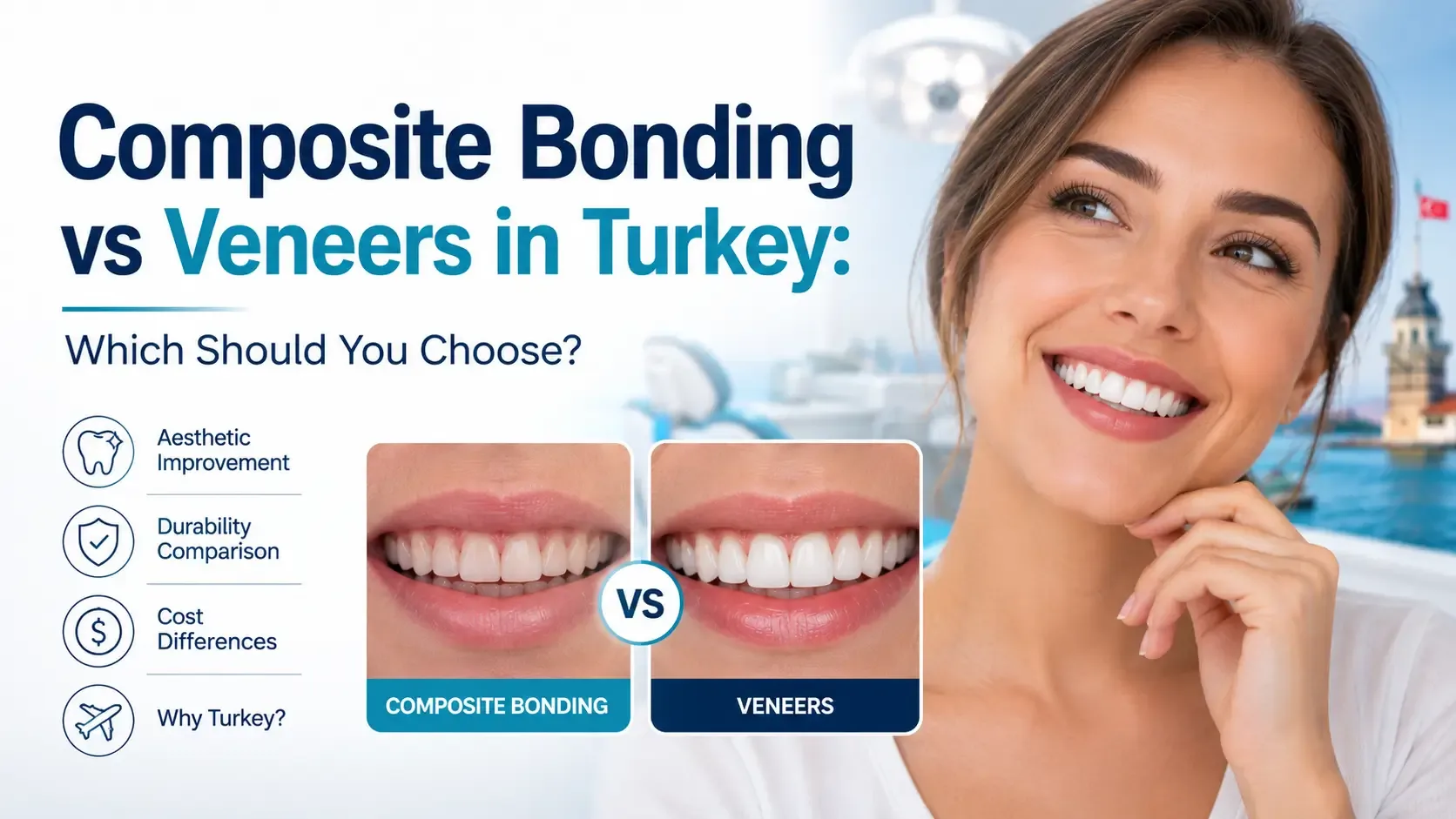
If you’re researching ways to improve the appearance of your smile without committing to a full veneer treatment, you’ve likely come across composite bonding as a cheaper, faster alternative. Both approaches can produce genuinely attractive results, but they work in very different ways and suit different situations. This guide compares composite bonding and porcelain veneers directly — cost, durability, appearance and maintenance — so you can decide which one actually fits your goals rather than defaulting to whichever sounds simpler.
Two Very Different Approaches to the Same Problem
Both treatments aim to improve the shape, colour or alignment of your teeth, but composite bonding works by sculpting tooth-coloured resin directly onto your existing teeth, while porcelain veneers involve a thin custom-made shell bonded onto the tooth surface after minimal preparation. Bonding is essentially an additive, chairside sculpting process; veneers are a lab-made restoration fitted over the tooth.
What Composite Bonding Involves
Composite bonding uses a tooth-coloured resin applied directly to your teeth in layers, shaped and polished by your dentist during the same appointment. Because there’s no lab involved and no waiting period, most bonding cases are completed in a single visit, sometimes within an hour or two depending on how many teeth are being treated. It’s also largely reversible and requires little to no removal of your natural tooth structure, which appeals to patients who want a more conservative first step before considering anything more permanent.
What Porcelain Veneers Involve
Veneers require a small amount of tooth preparation, an impression or digital scan, and lab fabrication before they’re bonded onto your teeth — typically across one or two visits depending on the clinic’s workflow. Because they’re custom-milled from a stronger, more stain-resistant material, they generally offer a more durable, longer-lasting result than bonding, at a correspondingly higher cost and with a process that can’t be completed in a single same-day appointment.
Comparing Cost: Budget-Friendly vs Long-Term Investment
Composite bonding is significantly less expensive per tooth than porcelain veneers, which is one of its biggest draws for patients working within a tighter budget or wanting to address just one or two teeth rather than a full smile makeover. Veneers cost more upfront, but their longer lifespan means the cost-per-year over a decade or more can end up comparable to, or sometimes lower than, bonding that needs periodic touch-ups or full redoing every few years.
Comparing Longevity and Durability
This is where the two options diverge most. Composite bonding typically lasts three to seven years before it needs touching up or replacing, since the resin material is more prone to chipping, staining and wear than porcelain. Veneers, particularly in premium materials, commonly last ten to fifteen years or more with proper care, and are considerably more resistant to everyday wear, staining and minor impacts.
Comparing Natural Appearance
Well-done composite bonding can look very natural, especially for smaller corrections like closing a minor gap or reshaping a chipped edge. However, composite doesn’t match porcelain’s light-reflecting translucency as closely, and it tends to lose some of its shine and polish faster than porcelain does, meaning it can look noticeably less lustrous after a couple of years compared to when it was freshly applied. Veneers hold their finish and colour more consistently over the years, which is part of why they’re often the recommended option for a more significant, longer-term smile transformation.
How Much Natural Tooth Is Removed
Bonding is the more conservative option in this respect — it typically requires little to no removal of your natural tooth enamel, and in many cases can be reversed by simply removing the resin. Veneers require a thin layer of enamel to be removed to make room for the porcelain shell, which is a permanent change to the tooth. For patients who want to keep their options fully open or who are nervous about any permanent alteration, this is often the deciding factor in favour of bonding, at least as a starting point.
Maintenance and Staining Over Time
- Composite bonding: more prone to staining from coffee, tea, red wine and tobacco; may need polishing or minor touch-ups every couple of years.
- Porcelain veneers: highly stain-resistant and holds its shade for many years with normal hygiene.
- Both: benefit from avoiding biting directly into very hard foods, and from wearing a night guard if you grind your teeth.
Can You Start With Bonding and Move to Veneers Later
Yes, and this is a genuinely common path. Some patients use composite bonding as a low-commitment way to trial a change in tooth shape or to close a small gap, then decide later whether they want the more durable, longer-lasting result that veneers provide. Because bonding doesn’t require permanent removal of tooth structure, moving from bonding to veneers later is straightforward from a treatment perspective, whereas moving the other way — from veneers to bonding — isn’t really applicable, since veneers are the more permanent, involved treatment of the two.
Combining Both: A Mixed Approach
It’s also worth knowing that bonding and veneers aren’t always an either-or decision across your whole smile. Some patients choose veneers for their most visible front teeth, where the case for a premium, long-lasting material is strongest, while using bonding for smaller, less visible touch-ups elsewhere, such as a minor chip on a lower tooth. A dentist assessing your case properly should be willing to discuss this kind of mixed approach rather than defaulting to one material across every tooth being treated.
Who Should Choose Which
Composite bonding tends to suit patients who want a quick, affordable, reversible improvement to one or two teeth, who are correcting a minor chip or gap, or who want to trial a change in shape before committing to something more permanent. Veneers tend to suit patients planning a fuller smile transformation, who want the most durable and stain-resistant long-term result, or who are treating multiple teeth where consistency of colour and shape across the whole set matters most. With 32 years of dental experience guiding patients through both options, the right starting point is almost always determined by your budget, your timeline and how permanent a change you’re genuinely ready for — not by which option is trending.
Sensitivity and Everyday Comfort
Composite bonding involves very little to no removal of enamel, so most patients notice little to no sensitivity change afterward. Veneers can occasionally cause mild, temporary sensitivity to hot or cold in the days after the enamel preparation and bonding stage, which typically settles within a week or two as the tooth adjusts. Neither option should cause ongoing sensitivity once you’re fully healed — persistent sensitivity beyond the first couple of weeks is worth flagging to your dentist regardless of which treatment you chose.
Repair and Touch-Up Process
If a bonded tooth chips or wears down, repairing it is usually a quick, simple chairside process — your dentist adds and reshapes fresh composite directly onto the existing bonding, often within a single short appointment. Veneer repairs are more involved, since a chip or crack in porcelain typically can’t be patched in the same way; the affected veneer usually needs to be remade in the lab and re-bonded, which takes longer and costs more than a bonding touch-up.
What to Expect at Your Consultation
Whichever option you’re leaning toward, a proper consultation should include a close look at the specific teeth you want to change, an honest opinion on whether bonding alone can achieve what you’re picturing or whether veneers would genuinely serve you better, and a clear breakdown of cost and expected lifespan for each path. Being shown examples of both treatments on similar cases to yours is one of the most useful ways to set realistic expectations before deciding.
A Simple Way to Frame the Decision
If your main goal is a fast, affordable improvement to a small area — a chipped edge, a minor gap, slightly uneven shape on one or two teeth — bonding is usually the sensible starting point. If your goal is a fuller, longer-lasting transformation across several visible teeth, and you’re comfortable with a higher upfront cost in exchange for a result that holds up for over a decade, veneers are generally the stronger long-term choice. Neither option is inherently “better” in the abstract; the right one depends entirely on the scale of the change you want and how long you want it to last.
Getting a Personalised Recommendation
If you’re deciding between composite bonding and veneers, send us a few clear photos of your smile along with a short description of what you’d like to change — whether that’s colour, shape, small gaps or chips. We’ll come back with an honest recommendation based on your specific case, along with a realistic cost and timeline comparison for both options.