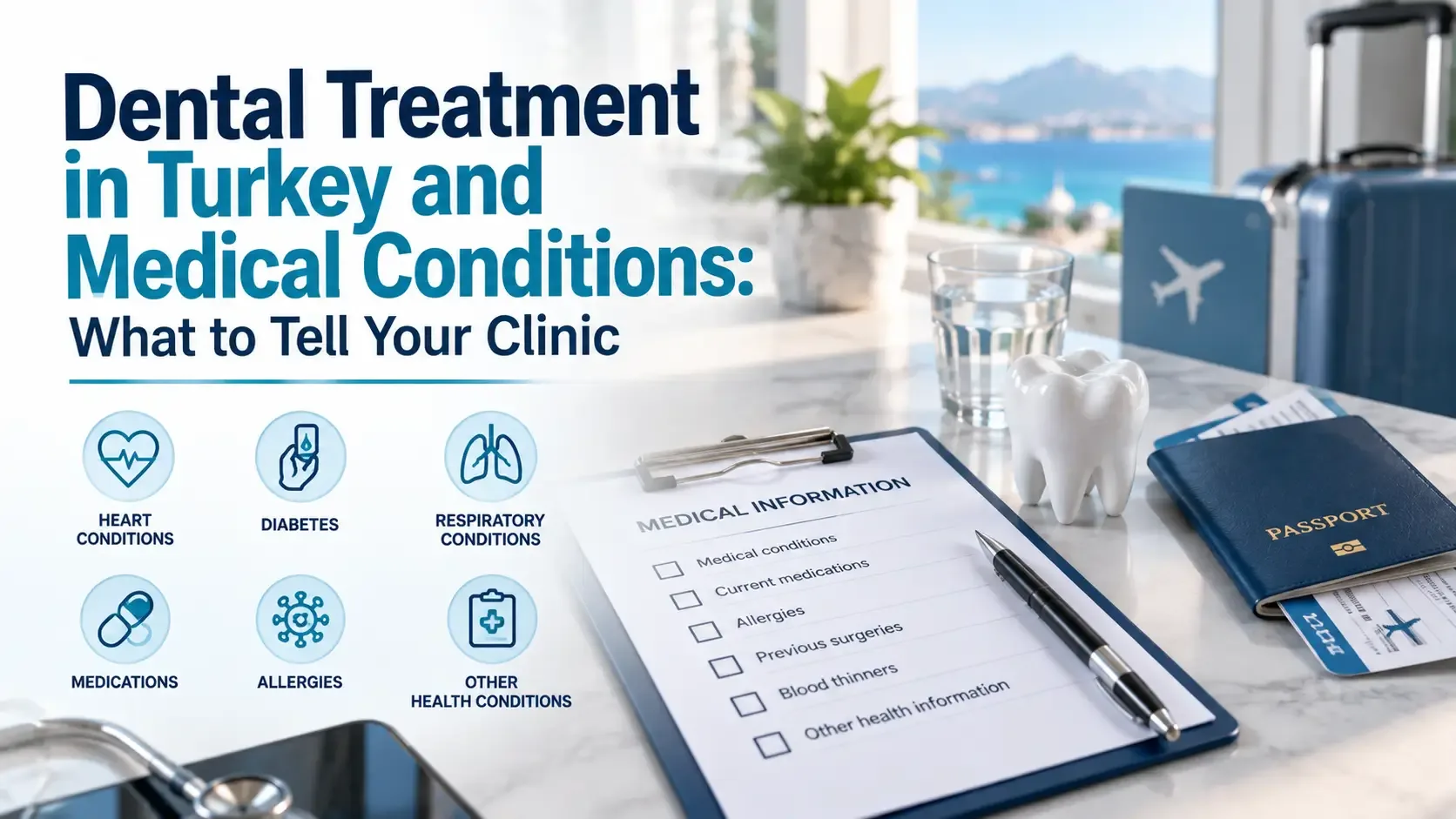
Most guides to dental treatment in Turkey focus on the procedures themselves — veneers, implants, timelines and cost. Far less is written about something just as important: how your existing health conditions affect your treatment plan, and what you actually need to disclose before you travel. Being open about your medical history isn't a formality; it directly shapes how safely and successfully your treatment goes. This guide covers the most common conditions worth discussing and why honesty here protects you rather than complicates things.
Why Full Disclosure Matters More Than Patients Expect
It can feel tempting to downplay a health condition, particularly if you're worried it might affect whether treatment goes ahead, delay your trip, or add cost. In reality, the opposite is almost always true: a clinic that knows your full medical picture can plan around it properly, often with only minor adjustments, whereas a clinic working with incomplete information is far more likely to encounter an unexpected complication mid-treatment, which is a genuinely worse outcome for everyone involved.
Diabetes and Dental Implants
Diabetes, particularly when well-controlled, doesn't automatically rule out implant treatment, but it does change how healing needs to be monitored. Elevated blood sugar levels can slow wound healing and increase infection risk, which is why your dentist will typically want to know your recent blood sugar control, not just whether you have a diabetes diagnosis. Well-managed diabetes generally allows implant treatment to proceed with standard protocols; poorly controlled diabetes may mean additional precautions, a more conservative treatment plan, or in some cases a recommendation to improve control before proceeding with implant surgery specifically.
Blood Thinners and Bleeding Risk
If you take blood-thinning medication — whether prescribed for a heart condition, a history of blood clots, or another reason — this is essential information for any procedure involving extractions, implant placement, or gum treatment, since these medications increase bleeding risk during and after surgery. Depending on the specific medication and your underlying condition, your dentist may coordinate with your GP or cardiologist about a temporary adjustment, or may simply plan the procedure with extra precautions in place. This is never something to withhold, even if you're worried it might delay treatment — an unexpected bleeding complication mid-procedure is a far more serious situation than a short planning conversation beforehand.
Pregnancy and Dental Treatment
Routine dental care, including check-ups and simple fillings, is generally considered safe throughout pregnancy, though timing and treatment choices often shift depending on trimester. Elective cosmetic treatment like veneers is typically better scheduled for after pregnancy given the additional physical demands of longer appointments, while urgent issues like infection or pain are addressed regardless of timing, with extra care taken around medication and X-ray exposure. If you're pregnant or trying to conceive around your planned travel dates, mentioning this early allows your treatment plan to be adjusted sensibly rather than assumed to be identical to a non-pregnant patient's.
Heart Conditions and Antibiotic Cover
Certain heart conditions carry a small increased risk of infection spreading from dental procedures into the bloodstream, and patients with specific cardiac histories are sometimes recommended antibiotic cover before invasive dental work as a precaution. This is a well-established, standard precaution in dentistry generally, not something unique to treatment abroad, but it does mean your dentist needs full knowledge of any cardiac history, previous heart surgery, or valve conditions before finalising your plan.
Autoimmune Conditions and Healing
Conditions affecting immune function or healing capacity, including some autoimmune diseases and certain medications used to manage them, can affect how quickly you heal after surgical dental procedures like implant placement or extractions. This doesn't automatically rule out treatment, but it's exactly the kind of detail that changes how conservatively a treatment plan is approached, and how closely healing is monitored afterward.
What to Prepare Before Your Consultation
A list of current medications, including dosages, particularly any blood thinners or immunosuppressants.
Details of any diagnosed conditions, even ones that feel unrelated to dental health at first glance.
Recent relevant test results if available, such as blood sugar control for diabetic patients.
Contact details for your GP or specialist, in case your dental team wants to coordinate directly on anything complex.
An honest account of your smoking, alcohol and general health habits, since these interact with many of the conditions above.
How This Information Shapes Your Treatment Plan
None of this is about disqualifying you from treatment — it's about building a plan that's genuinely appropriate for your specific health picture, whether that means additional monitoring, a slightly more conservative approach, coordination with your regular doctor, or simply confirmation that standard treatment is entirely appropriate for your case. With 32 years of dental experience assessing exactly these situations, patients who share their full medical history upfront consistently have smoother, safer treatment experiences than those who reveal relevant details only once a question arises during the procedure itself.
A Note on Privacy and Trust
It's entirely reasonable to want your medical information handled discreetly and used only for planning your care. Reputable clinics treat this information with the same confidentiality any medical provider would, and sharing it fully is what allows them to look after you properly — withholding it doesn't protect your privacy in any meaningful sense, it simply removes information your dental team needs to keep you safe.
Smoking, Alcohol and Recreational Substance Use
Beyond diagnosed conditions, it's worth being honest about smoking, regular alcohol consumption, and any recreational substance use, since all of these can interact with sedation, affect healing after surgical procedures, and influence how certain medications are metabolised. This isn't about judgement — it's information your dental team needs to plan sedation dosing and aftercare accurately, and omitting it can genuinely affect how safely a procedure goes.
Osteoporosis and Bone Medication
Certain medications used to treat osteoporosis, particularly a class called bisphosphonates, carry a small but recognised risk of affecting jaw bone healing after invasive procedures like extractions or implant placement. If you're taking or have previously taken this type of medication, it's important information for your dental team, who may need to plan around it, request additional information from your prescribing doctor, or adjust the proposed treatment approach depending on the specific medication and how long you've been taking it.
If Your Condition Changes Between Booking and Travel
Health circumstances can change in the weeks between booking treatment and travelling — a new diagnosis, a medication change, or a pregnancy discovered after your trip was already arranged. If anything changes, update your clinic as soon as you know, rather than waiting until you arrive, since this gives them the most time to adjust your plan sensibly, reschedule if genuinely necessary, or simply confirm that nothing needs to change at all.
Working Alongside Your UK Doctor
For more complex medical histories, some clinics are happy to correspond directly with your GP or specialist before finalising a treatment plan, particularly around medication adjustments for procedures involving bleeding risk. This kind of coordination between your UK healthcare provider and your Turkey clinic isn't unusual and shouldn't feel like an inconvenience — it's simply good practice for ensuring your treatment is planned around your complete health picture rather than an incomplete one.
The Goal Is a Plan Built for You, Not a Generic Patient
Every condition covered here changes the picture in a specific, manageable way, not in a way that should cause worry or embarrassment about disclosing it. The purpose of sharing your full medical history isn't to create obstacles — it's to make sure the plan you receive is genuinely built around your real health, rather than an assumed, average patient who may look nothing like you.
A Short Checklist Before You Travel
Have you listed every medication you currently take, including over-the-counter supplements?
Have you mentioned any diagnosed conditions, even ones that feel unrelated to dental care?
Have you flagged any recent changes to your health since you first enquired about treatment?
Do you have your GP's contact details ready in case coordination is needed?
Peace of Mind Goes Both Ways
Just as you want reassurance that your treatment will be handled safely, a clinic wants confidence that it has everything needed to look after you properly. A short, honest conversation about your health at the very start of the process is what makes that mutual confidence possible, setting the tone for a trip built on transparency rather than guesswork.
Getting Started
If you have a health condition and you're not sure how it might affect a treatment you're considering, send us the details along with any current medications you're taking. We'll give you an honest picture of how your plan might need to be adjusted, so there are no surprises once you arrive for treatment.