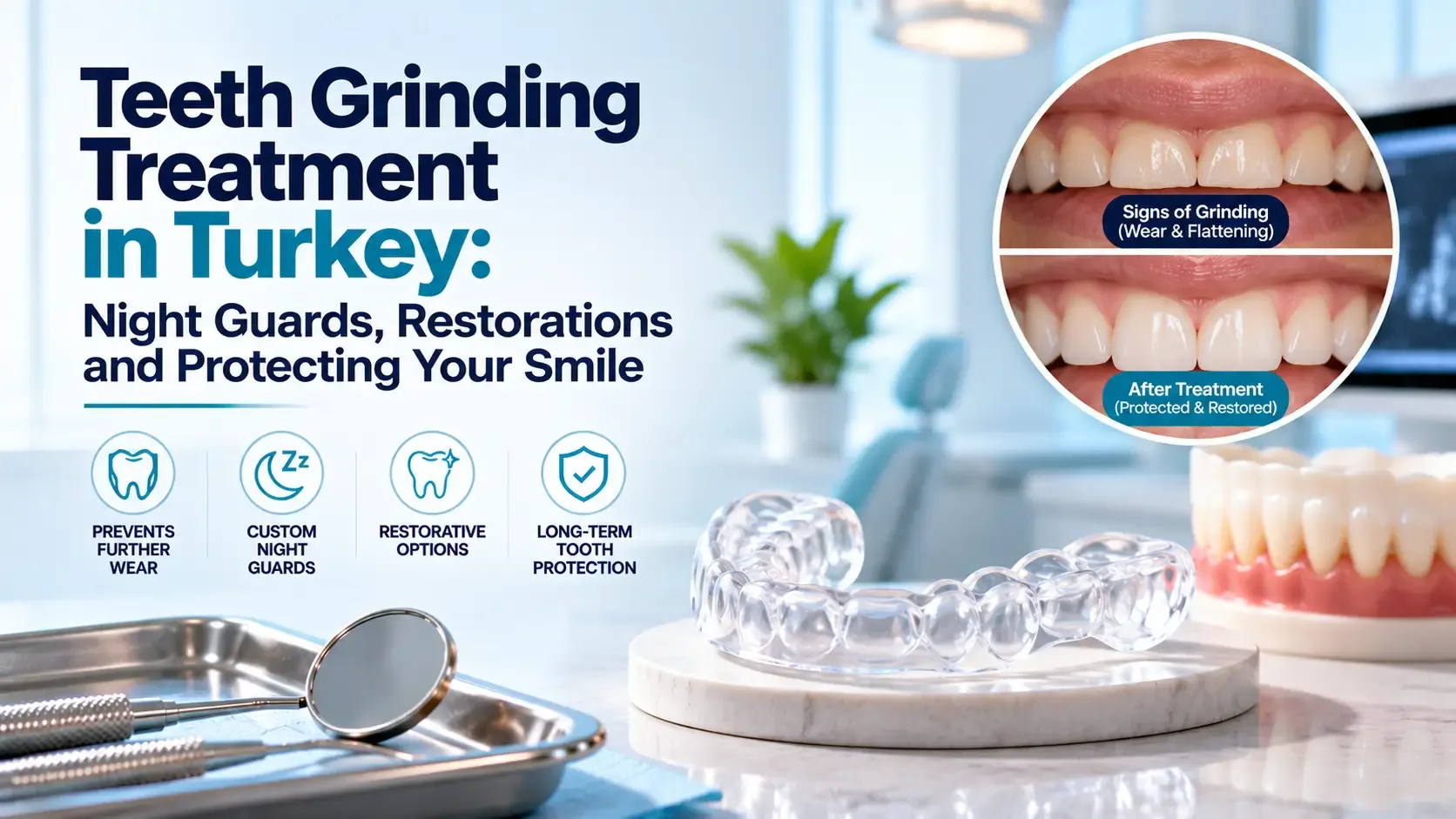
Many people only discover that they grind their teeth when a dentist points out the wear, or when a partner hears it at night. Left alone, grinding can wear down enamel, chip teeth and restorations, and cause headaches and jaw pain. It also matters a great deal for anyone planning veneers, crowns or implants, because grinding can shorten the life of expensive treatment. This guide explains what causes grinding, how it is diagnosed and managed, and how teeth grinding treatment in Turkey typically works for UK patients.
What Is Bruxism?
Bruxism is the medical term for habitual grinding or clenching of the teeth. It can happen during the day, often as a subconscious clench in moments of concentration or stress, or at night during sleep. Many people do it without realising. Mild grinding is common and may not cause problems, but heavy or long-term grinding can cause significant damage to teeth, gums and the jaw joints.
Signs That You May Be Grinding Your Teeth
Teeth that look flattened, shortened or worn at the edges.
Chipped or cracked teeth and restorations.
Sensitivity to hot and cold as enamel wears away.
Headaches, particularly on waking, and tension around the temples.
A tired, tight or painful jaw, and sometimes clicking in the jaw joint.
Tooth marks on the tongue or a roughened line inside the cheeks.
Not every sign points to grinding, so a proper examination is needed to find the cause.
What Causes Teeth Grinding?
The causes are not fully understood and often involve a mix of factors. Stress and anxiety are commonly linked to grinding, as are sleep disturbances, certain medications, caffeine and alcohol. The way the teeth meet can play a role in some cases. In some patients, grinding may be associated with disturbed breathing during sleep, so a good clinician will ask about snoring and tiredness, and may recommend a sleep assessment where appropriate. Identifying the likely factors helps to guide the right treatment.
How Grinding Damages Teeth
Enamel is the hardest substance in the body, but it is not designed to withstand hours of grinding. Over time, the biting surfaces wear down, the teeth become shorter and the underlying dentine, which is softer and more sensitive, becomes exposed. Teeth can crack and fillings and crowns can fracture. The jaw muscles can become enlarged and sore. It is a gradual process, which is why it is so often detected late.
How Grinding Is Diagnosed
Diagnosis begins with an examination of the teeth and the jaw muscles and joints, along with questions about your sleep, habits and stress levels. Dentists look at the pattern of wear, which can show whether the grinding is old or recent, and may take photographs or scans to monitor it over time. There is no single test, and the aim is to establish whether grinding is present, how severe it is and what is driving it.
Night Guards: The First Line of Protection
A night guard, or occlusal splint, is a custom-made appliance worn over the teeth at night. It does not stop the grinding itself, but it absorbs the forces and protects the teeth and restorations from wear. A guard made from a scan or impression of your own teeth fits far better than a shop-bought one, and it is usually much more comfortable to wear. Hard acrylic guards are common, and some patients are given a guard of different thicknesses depending on the severity of their grinding.
Other Ways to Manage Grinding
Managing stress, improving sleep habits and cutting back on caffeine and alcohol can help in some cases. Physiotherapy-style jaw exercises and relaxation techniques may reduce muscle tension. In selected patients, small doses of botulinum toxin in the jaw muscles may be used to reduce the force of clenching, although this should only be carried out by a suitably qualified practitioner and is not appropriate for everyone. A good clinic will discuss these options openly and will not rely on a single approach.
Restoring Teeth That Are Already Worn
When grinding has already caused significant wear, teeth can often be rebuilt. Depending on how much structure has been lost, options include composite bonding, veneers, onlays and crowns. The aim is to restore the shape, function and appearance of the teeth while protecting them from further damage. Restoration should not usually begin until the grinding is controlled, since new restorations placed on a heavily grinding mouth can break or wear quickly.
Grinding and Veneers
If you grind your teeth, veneers can still be an option, but the plan needs more care. Porcelain veneers are strong but can chip under heavy forces, so a night guard becomes an essential part of the treatment. The dentist may also adjust the design to reduce stress on the veneers. Our guide to composite versus porcelain veneers explains how the choice of material affects durability. A clinic that ignores your grinding when planning veneers is not looking after your long-term result.
Grinding and Dental Implants
Implants are strong, but grinding places extra load on them and on the bone around them, which can raise the risk of problems such as loosening or fracture of components. It does not rule out implants, but it needs to be considered in the planning, with careful attention to the bite and to protection with a night guard. With 32 years of dental experience, we regard control of grinding as an important part of keeping implants stable for the long term.
What the Process Looks Like in Turkey
A typical plan begins with an examination and a discussion of your symptoms, followed by scans or impressions for a custom night guard. If restorative work is needed, it can usually be planned in stages so that the bite is stable before final restorations are made. A night guard can often be made within a few days, which fits well into a short trip. Your clinic should explain how the guard will be checked and adjusted, and how you can get help once you are home.
Looking After Your Guard and Your Teeth
Clean your guard daily with a soft brush and cool water, and store it in its case when you are not wearing it. Bring it to your dental check-ups so that it can be checked for wear and fit. A guard that is cracked or no longer fits well should be replaced. Keep up regular hygiene appointments and tell your dentist if your symptoms change. Grinding can fluctuate with stress, so your needs may change over time.
Questions to Ask Before You Book
How will you assess whether I grind my teeth, and how severe it is?
Will I be given a custom night guard, and what is it made of?
How does my grinding affect the type of restoration you recommend?
What is your policy if a restoration chips or fails?
How can I get my guard adjusted or replaced once I am back in the UK?
Grinding in Children and Teenagers vs Adults
Grinding is common in children and often settles by itself as their teeth and jaws develop, which is why dentists tend to monitor rather than treat it. In adults, the picture is different. Wear accumulates over decades and does not repair itself, so persistent grinding is more likely to need active management. If you notice signs of wear in your teeth, it is worth having them assessed sooner rather than later, since early protection is far simpler than rebuilding teeth that have worn down.
Is Grinding Ever Cured?
For many people, grinding is a long-term habit that ebbs and flows rather than something that is cured once and for all. Stress levels, sleep quality and lifestyle all influence it. The realistic goal of treatment is to protect your teeth and reduce symptoms, not necessarily to stop the grinding altogether. Patients who accept this and wear their guard consistently tend to have the best long-term outcomes, with far less wear and damage to their restorations.
How Much Does Neglecting Grinding Cost Over Time?
Ignoring grinding often ends up being more expensive than managing it. Worn teeth may eventually need crowns or veneers, and restorations placed in a grinding mouth can fail early and need replacing. A custom night guard is a modest investment by comparison, and it is often the most cost-effective step you can take to protect any other dental work. Asking a clinic how they will protect your investment is a sign of a thoughtful approach to treatment.
Grinding, Sleep and Your General Health
Grinding sometimes overlaps with other health issues, such as disturbed sleep, snoring or jaw joint problems. Your dentist is not a replacement for your GP, but they can spot signs and encourage you to seek further assessment when appropriate. If you wake with a sore jaw, headaches or unexplained tiredness, mention it to both your dentist and your doctor. A joined-up approach tends to deliver better results than treating teeth in isolation.
Getting Started
If you think you grind your teeth, or you have worn or chipped teeth and want to protect any future work, send us a few clear photos of your teeth along with a note of your symptoms. We'll tell you honestly what we think is going on, how it can be managed and what we would recommend for your teeth.