



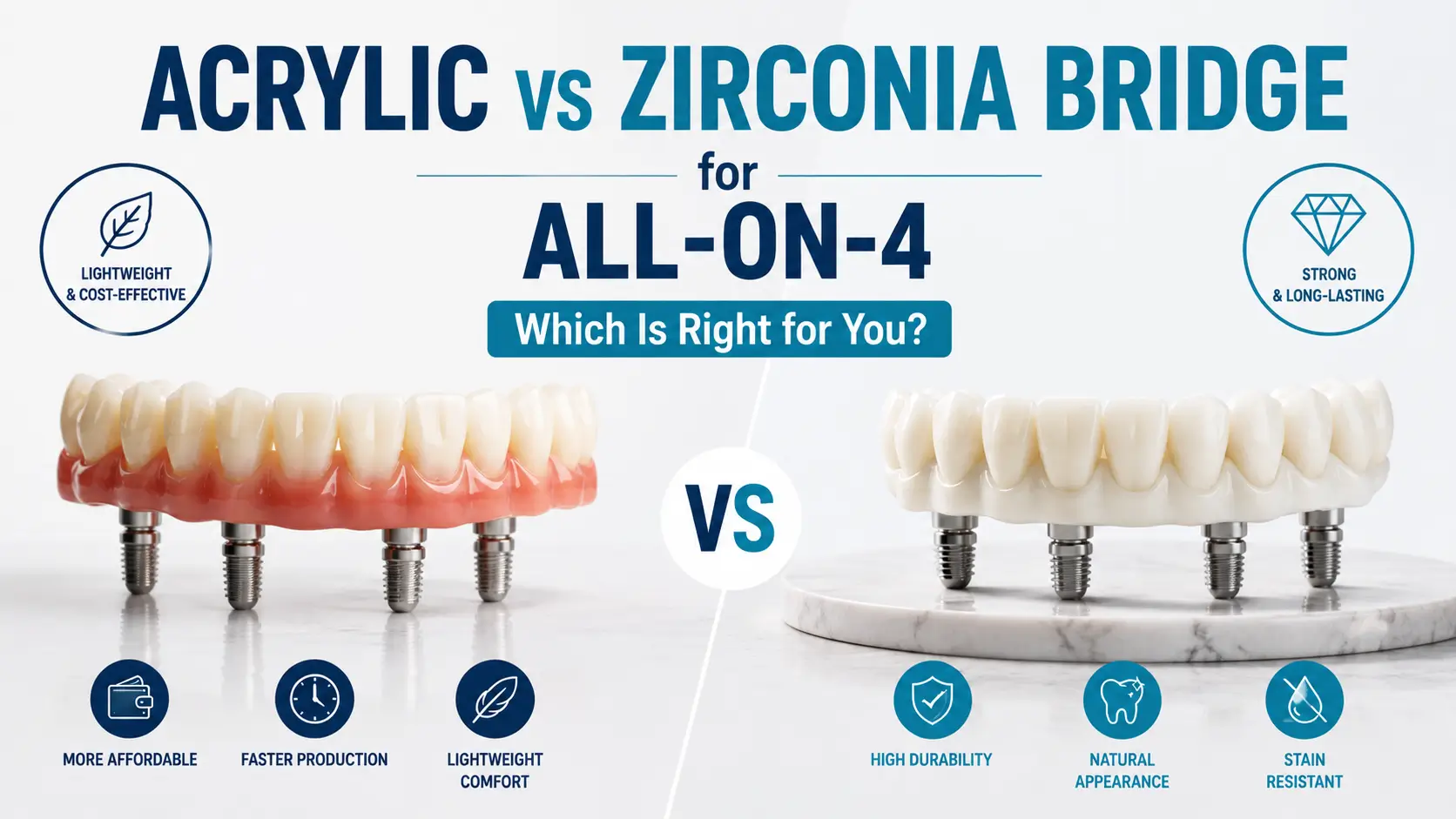
Once your All-on-4 implants have healed, the final decision that shapes how your new teeth look, feel and function for years to come is the material used for your permanent bridge. The two most common options are an acrylic hybrid bridge and a zirconia bridge, and the choice between them affects everything from day-to-day durability to long-term cost. This guide breaks down the real differences so you can make a decision based on what matters most for your situation, rather than simply picking whichever a clinic quotes first.
Two Material Options for Your Final All-on-4 Bridge
Both options are fixed, full-arch bridges attached permanently to your four implants, and both are considered proven, long-standing solutions used worldwide. The core difference is what they’re made from and how that affects strength, appearance, weight and price. Neither is a wrong choice in general terms — the right one depends on your bite forces, budget and priorities.
Acrylic (Hybrid) Bridges: What They Are
An acrylic hybrid bridge consists of a titanium framework for strength, with acrylic resin teeth and gum-coloured material built around it. It’s typically lighter than zirconia, more affordable, and has the advantage of being relatively straightforward to repair or adjust if something chips or wears down, since the materials involved are easier to modify chairside compared with milled zirconia. This is often the material used for the well-known All-on-4 “same-day teeth” approach, and many patients keep an acrylic hybrid as their long-term final bridge rather than upgrading to zirconia.
Zirconia Bridges: What They Are
A zirconia bridge is milled from a solid block of zirconium dioxide, a highly durable ceramic material also used in single crowns and veneers. It’s significantly stronger and more scratch- and stain-resistant than acrylic, and it holds its shade and polish for much longer under normal biting forces and everyday wear. The trade-off is a higher upfront cost and a repair process that’s more involved if damage does occur, since it usually requires remaking the affected section rather than a simple chairside patch.
Durability and Long-Term Wear
Zirconia is considerably more resistant to wear, chipping and staining over time, which is why it’s often recommended for patients with a strong bite or a history of grinding their teeth. Acrylic is more prone to gradual surface wear and can pick up staining from food, coffee or tobacco more readily over the years, sometimes requiring polishing or eventual replacement of the acrylic teeth sooner than a zirconia equivalent would need attention.
That said, acrylic hybrids have a long track record of functioning well for many years with proper care, and the wear difference matters far more for patients with heavier bite forces than for those with an average, moderate bite.
Aesthetics: Which Looks More Natural
Zirconia generally has the edge on natural translucency and light reflection, closely mimicking the way real enamel behaves, which is particularly noticeable in photos and bright daylight. Acrylic can still look very good and is shaded carefully to match, but tends to appear slightly more opaque and flat up close compared with zirconia. For patients whose top priority is the most natural possible appearance, zirconia is usually the stronger recommendation.
Weight and Feel in the Mouth
Acrylic bridges are noticeably lighter than zirconia, which some patients find more comfortable, particularly if they’re adjusting to a full-arch prosthesis for the first time. Zirconia’s added weight is rarely a problem once patients adapt, but it’s worth mentioning if a lighter feel is something you specifically value, especially in the upper jaw.
Cost Differences
Acrylic hybrid bridges are generally less expensive than zirconia, both in the material cost itself and often in the milling and lab work involved. Zirconia’s higher price reflects the material cost, the specialised milling equipment required, and its longer expected lifespan under normal use. When comparing quotes, it’s worth checking exactly which material is specified, since “final bridge included” can mean very different things depending on which option a clinic defaults to.
Maintenance and Repairs
- Acrylic: easier and generally cheaper to repair chairside if a tooth chips; more prone to staining over time; may need refreshing or replacement after several years of heavy use.
- Zirconia: highly resistant to chipping and staining; repairs typically require remaking the affected section rather than a quick chairside fix; holds its finish for many years with normal care.
- Both: benefit from a night guard if you grind your teeth, and from the same daily cleaning routine around the implant connections regardless of which material you choose.
Who Should Choose Which
Zirconia tends to suit patients who grind or clench, who prioritise the most natural possible appearance, or who would rather invest more upfront for a longer-lasting result with less day-to-day wear. Acrylic tends to suit patients working within a tighter budget, those who want a lighter feel in the mouth, or those who are comfortable with the idea of a straightforward chairside repair if something does chip over the years. With 32 years of dental experience fitting both materials across full-arch cases, the right recommendation always comes down to your bite pattern and priorities rather than a fixed rule that one material suits everyone.
Can You Switch From Acrylic to Zirconia Later?
Yes — this is actually a common path for patients who start with an acrylic hybrid as their initial final bridge, either for cost reasons or because it was the recommended option at the time, and later choose to upgrade to zirconia once the implants are fully settled and functioning well. Because the underlying implants remain the same either way, switching the bridge material later is a straightforward restorative step rather than a repeat of the original surgery. Some patients deliberately choose this staged approach: acrylic first to keep initial costs lower, with a zirconia upgrade planned for a future visit once they’ve lived with their new teeth for a while.
Questions Worth Asking Before You Choose
Before deciding, it’s worth asking your dentist directly how your specific bite forces and any history of grinding might affect the lifespan of each material, what the realistic cost difference is once lab work and milling are included, and what the repair process actually looks like for each option if something does go wrong years down the line. It’s also worth asking to see real examples of both materials in a finished case, ideally viewed in natural light rather than under clinic lighting alone, since this is one of the clearest ways to judge the aesthetic difference for yourself before committing.
How the Final Choice Affects Your Bite Over Time
Your bite naturally changes slightly over the years regardless of which material you choose, as the soft tissue and remaining bone continue to settle after implant placement. Zirconia’s rigidity holds its shape and bite contact more precisely over the long term, which some dentists factor in for patients with particularly strong bite forces, while acrylic’s slight flexibility can actually act as a gentler cushion for the implants themselves during heavy biting, which is one reason it remains a genuinely reasonable long-term choice rather than simply a cheaper starting point.
What Most Patients End Up Choosing
In practice, patients with a moderate, average bite and a reasonable budget often choose acrylic as a genuinely durable long-term option, particularly when it’s clearly explained rather than presented as simply the cheaper fallback. Patients with a history of heavy grinding, a strong bite, or a specific priority on the most natural possible appearance more often lean toward zirconia despite the higher cost, viewing it as a longer-term investment. Neither pattern is a hard rule — it simply reflects how the trade-offs tend to line up with different patients’ priorities once they understand both options clearly.
A Simple Way to Frame the Decision
If cost were no factor at all, zirconia would be the default recommendation for nearly every patient, purely on strength and appearance. In reality, cost is a genuine factor for most people, which is exactly why acrylic remains such a widely used, sensible option rather than a compromise to be embarrassed about. The more useful question isn’t “which is objectively better” but “which set of trade-offs fits my bite, my budget and my expectations for how the bridge should look and feel day to day” — and that’s a conversation worth having properly with your dentist rather than deciding from a price list alone.
Getting a Personalised Recommendation
If you’re approaching the final bridge stage of All-on-4 treatment, or planning ahead before starting, send us details of your case along with any relevant history of teeth grinding or previous dental work. We’ll talk you through which material genuinely suits your bite and budget, along with a clear cost comparison so you can decide with full information rather than guesswork.