



QUICK ANSWER
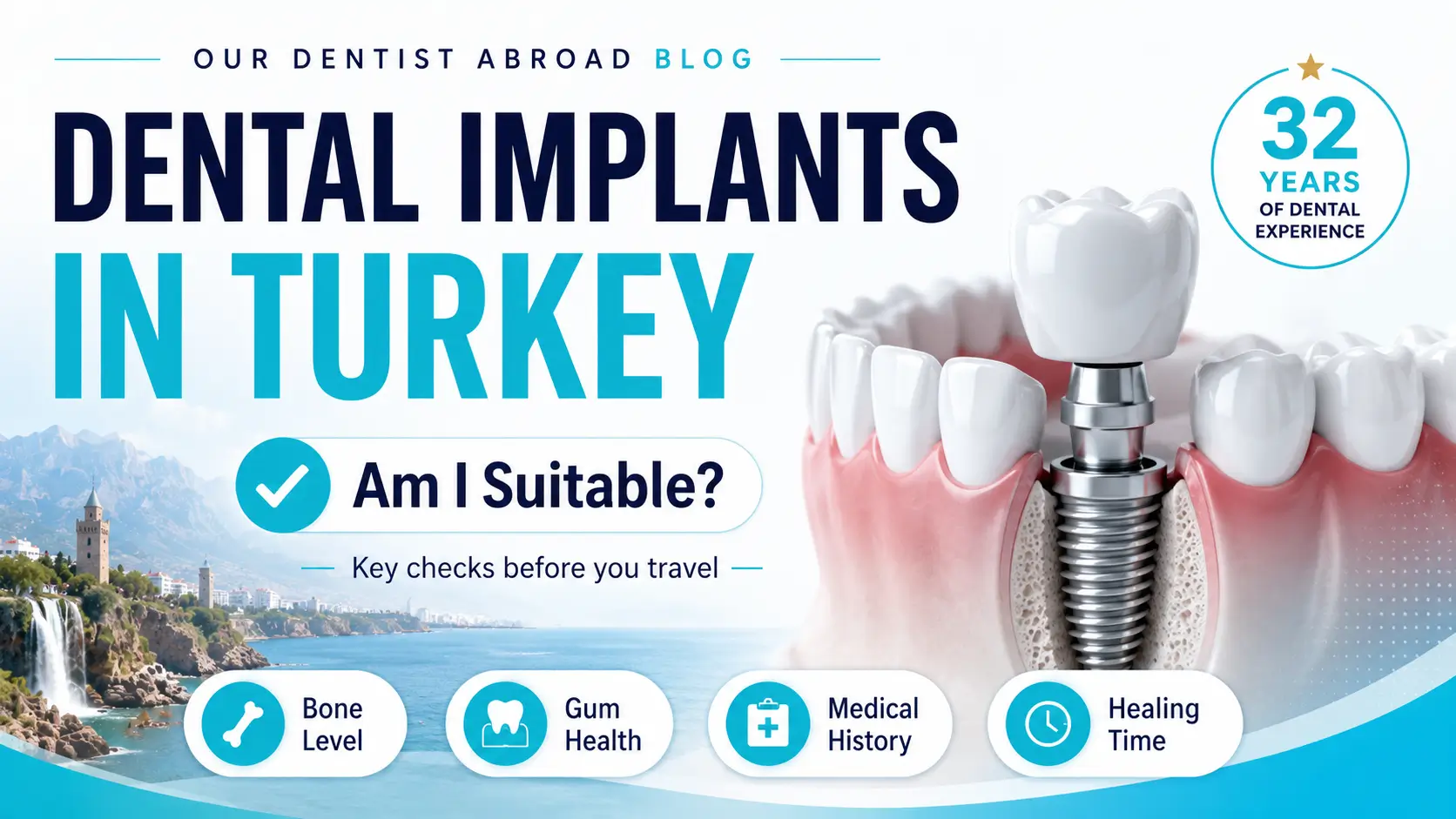
You may be suitable for dental implants in Turkey if you have enough healthy jawbone, stable gum health, a clear medical history and realistic expectations about timing. The only reliable way to know is through a proper dental assessment, usually including dental photos, X-rays or a 3D CBCT scan.
KEY TAKEAWAYS
Dental implants need healthy bone and gums to support long-term stability.
Smoking, uncontrolled health conditions and active gum disease can affect healing.
Some people need bone grafting or sinus lift before implants can be placed.
Implant care does not end when you fly home; long-term hygiene and check-ups matter.
A clear written plan is safer than choosing a package based only on the number of implants.
INTRODUCTION
Dental implants are one of the most searched dental options for people from the UK considering dental care in Turkey. They can replace missing teeth, support fixed bridges and help people move away from loose dentures.
But implants are not simply a product that can be booked like a hotel room. They are placed into living bone, which means suitability depends on your mouth, your health, your habits and your long-term care routine.
At Our Dentist Abroad, backed by 32 years of dental experience, implant planning starts with one question: is this the right option for your mouth, not just the most popular option online?
This guide explains the main checks before travelling to Turkey for dental implants.
1. Do You Have Enough Jawbone?
Dental implants need enough bone to hold them securely. When a tooth has been missing for a long time, the jawbone in that area can gradually shrink because it is no longer being stimulated by the natural tooth root.
This does not always mean implants are impossible. It may mean that extra planning is needed.
Your dentist may need to check:
- Bone height
- Bone widt
- Bone density
- Distance from the sinus in the upper jaw
- Distance from important nerves in the lower jaw
The position of nearby teeth
For this reason, a 3D CBCT scan can be important in implant planning. A normal dental X-ray can show useful information, but a 3D scan gives a more detailed view of the jawbone and surrounding structures.
If the bone level is not enough, options may include bone grafting, sinus lift or choosing a different implant position.
2. Is Your Gum Health Stable?
Healthy gums are essential for dental implants. If there is active gum disease, bleeding, infection or heavy plaque build-up, the implant area may not heal as well as expected.
Before implant placement, your dentist should check whether your gums are healthy enough to support the process. If gum disease is present, it may need to be stabilised first.
Warning signs can include:
- Bleeding when brushing
- Loose teeth
- Swollen or tender gums
- Bad breath that does not improve
- Receding gums
- Previous history of periodontal disease
Dental implants are not immune to gum problems. Similar to natural teeth, they need daily cleaning and professional maintenance. Poor gum health can increase the risk of inflammation around implants later.
3. Are You a Smoker?
Smoking does not always mean you cannot have dental implants, but it can make healing more difficult. Smoking can reduce blood flow, affect gum health and increase the risk of problems around implants.
If you smoke, it is important to be honest during your first assessment. Your dental team may advise reducing or stopping smoking before and after implant placement, especially during the healing phase.
The aim is not to judge your habits. The aim is to plan around real risk factors so that your implant has the best possible environment to heal.
4. Do You Have Any Medical Conditions?
Your general health can affect implant planning. Some health conditions or medications can influence healing, bone response or infection risk.
You should tell your dental team if you have:
Diabetes
Heart conditions
Osteoporosis
Autoimmune conditions
Previous cancer care involving radiotherapy
A history of heavy bleeding
Long-term steroid use
Medication affecting bone healing
Recent surgery or major illness
Having a medical condition does not automatically mean implants are not possible. It means your case should be assessed carefully and, where needed, your dental team may ask for extra information from your doctor.
The safest plans are built on complete information, not guesswork.
5. How Many Teeth Are Missing?
Suitability also depends on how many teeth are missing and where they are missing from.
A single missing tooth may need one implant and one crown. Several missing teeth may need fewer implants supporting a bridge. A full arch may need a different approach, such as All-on-4, All-on-6 or another full-arch plan.
This is why the number of missing teeth does not always equal the number of implants needed.
For example, if three teeth are missing in a row, your dentist may not need to place three separate implants. In some cases, two implants can support a bridge. In other cases, separate implants may be more suitable.
The right plan depends on your bite, bone level, gum health and the position of the missing teeth.
6. Do You Need Extraction First?
Some people still have damaged or loose teeth in the area where implants are planned. These teeth may need to be removed before implant placement.
In some cases, an implant can be placed soon after extraction. In other cases, the area needs time to heal first. If there is infection, bone loss or a complex extraction, a staged plan may be safer.
This is an important point for people travelling from the UK. A fast plan is not always the best plan. Sometimes waiting gives the bone and gum tissue a better chance to heal properly.
7. Are You Expecting Everything in One Trip?
Some implant cases can begin during one visit, but many implant plans need more than one stage.
A common journey may include:
Initial assessment and scan
Implant placement
Healing phase
Second visit for final crown or bridge
Long-term check-ups
The healing phase allows the implant to integrate with the jawbone. This process takes time and cannot be rushed safely.
This is why people from the UK should be careful with offers that promise everything too quickly. A realistic timeline is part of responsible implant planning.
8. Do You Understand the Aftercare?
Implants need long-term care. They are not a “fit and forget” solution.
After returning to the UK, you should continue with:
Daily brushing
Cleaning around the implant
Interdental brushes or floss where advised
Regular hygiene appointments
Check-ups with a dentist
Night guard use if you grind your teeth
Immediate contact if you notice swelling, pain or looseness
Your dental team in Turkey should also provide clear documents about the implant system used. This can help your UK dentist understand what has been placed and how to support your ongoing care.
9. What Should You Send Before Travelling?
Before you travel, your dental team should ask for enough information to understand your case.
Helpful details include:
Clear smile photos
Close-up photos of upper and lower teeth
Photos showing missing teeth
Recent dental X-rays if available
Medical history
Medication list
Smoking status
Previous dental work
Your main concerns and expectations
Photos alone are not always enough to confirm implant suitability, but they can help the team understand the starting point. X-rays or a 3D scan may still be needed before any final plan is confirmed.
10. When Might Implants Not Be the Best Option?
Dental implants are not right for everyone. A different option may be safer or more suitable if there is not enough bone, if gum disease is active, if healing risk is high or if the timeline does not match what your mouth needs.
Alternatives may include:
Dental bridge
Partial denture
Full denture
Bone grafting before implants
A staged plan
A different implant-supported bridge design
The aim should never be to force implants into every case. The aim should be to choose the option that protects your health, function and long-term result.
Why 32 Years of Dental Experience Matters
Implant planning is not only about placing a screw into bone. It is about understanding the full mouth, the bite, the gums, the bone, the smile line and the person’s long-term maintenance needs.
With 32 years of dental experience behind the clinical team, Our Dentist Abroad focuses on careful planning, clear communication and realistic timelines for people travelling from the UK to Antalya.
That means your plan should explain not only what can be done, but also what should not be rushed.
Final Thoughts
You may be suitable for dental implants in Turkey, but the decision should be based on proper checks rather than a quick package offer.
Before travelling, make sure your dental team understands your bone level, gum health, medical history, smoking status and long-term care needs. A clear, personalised plan is the safest starting point.
FAQ
Can everyone get dental implants in Turkey?
No, dental implants are not suitable for everyone. Your bone level, gum health, medical history and healing risk should be checked before any final plan is made.
Do I need a 3D scan before dental implants?
In many implant cases, a 3D CBCT scan is useful because it shows bone height, width and nearby structures in detail. Your dentist can confirm whether it is needed for your case.
Can smokers have dental implants?
Smokers can sometimes have dental implants, but smoking can make healing more difficult. Your dental team may advise stopping or reducing smoking before and after the procedure.
How many trips are needed for dental implants in Turkey?
Many implant plans need two visits because the implant requires time to heal before the final crown or bridge is fitted. The exact timeline depends on your mouth and the type of implant plan.
What should I send before travelling?
Clear dental photos, recent X-rays if available, medical history, medication details and your main concerns are helpful. These details support planning before you travel.