



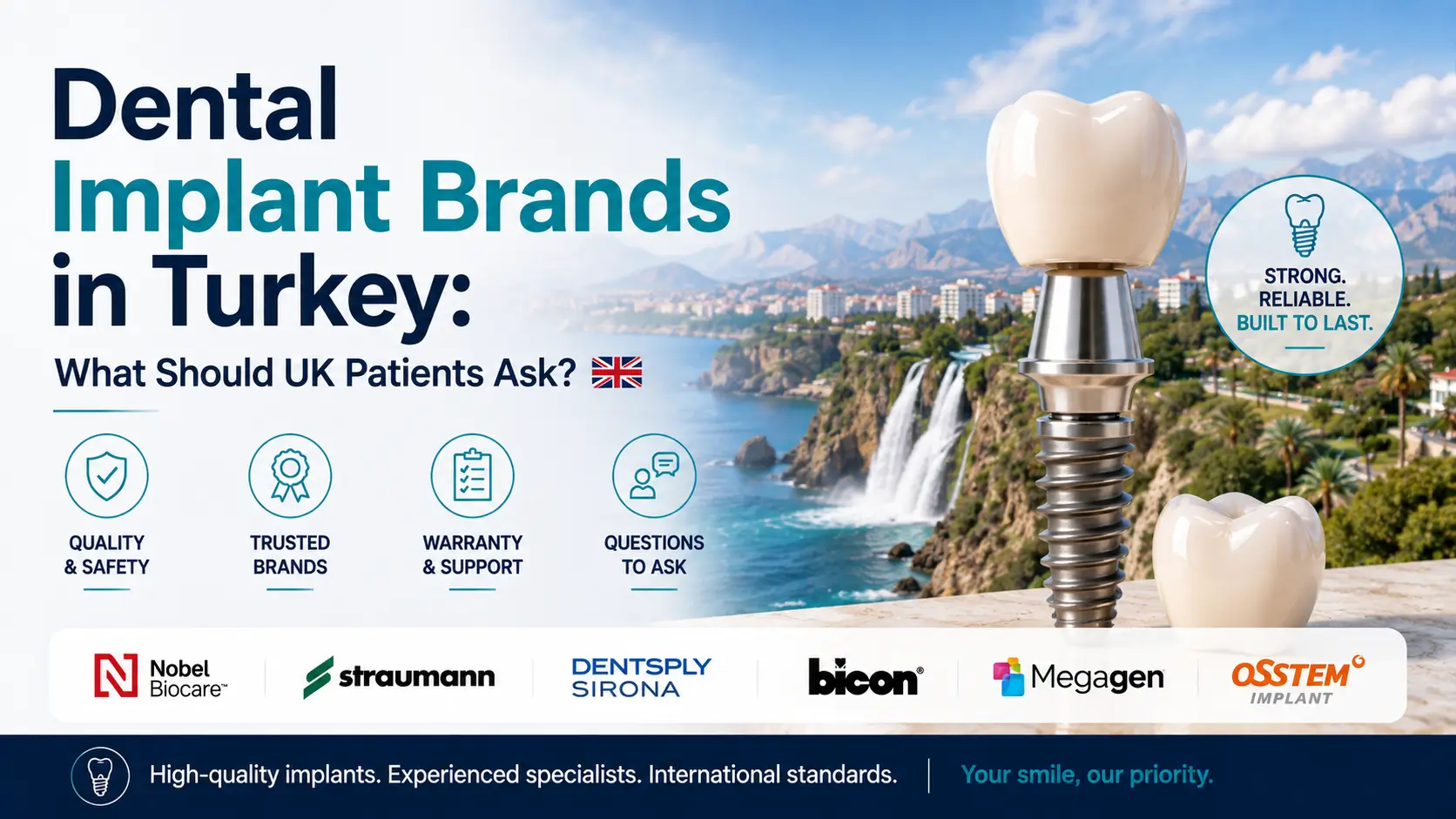
Search online for dental implant brands in Turkey and you’ll quickly find endless lists ranking one manufacturer above another, often written by people with no clinical background at all. The truth is that most well-established implant brands used in reputable Turkish clinics are genuinely good options, backed by decades of clinical research. The more useful exercise isn’t picking a “best” brand from a ranking — it’s knowing which questions to ask your clinic so you can judge whether the brand being used, whatever it is, comes with the documentation, warranty and long-term support that actually protects you.
Why Brand Comparisons Miss the Point
Dozens of implant manufacturers operate globally, and several of the most widely used — including brands like Straumann, Nobel Biocare, and various well-established Korean and European manufacturers — have strong long-term clinical data behind them. Ranking these brands against each other in a generic “best implant brands Turkey” article doesn’t really help you, since the brand itself is only one part of a successful outcome. The skill of the dentist placing it, the quality of your bone, and how well your case was planned all matter just as much, if not more, than which specific manufacturer’s logo is stamped on the implant.
Question One: Which Specific Brand and System Is Being Used?
This sounds obvious, but it’s worth asking explicitly and getting a specific answer rather than a vague reassurance like “a premium European brand.” A clinic confident in its materials will tell you the exact manufacturer and implant system without hesitation, since this information should be recorded in your treatment notes regardless. If a clinic is reluctant to specify the brand before treatment, that’s worth taking seriously as a red flag.
Question Two: Is the Brand Internationally Certified and Widely Available?
Established implant brands are certified to recognised international standards and have their components — abutments, replacement parts, compatible tools — stocked by dental suppliers in most countries, including the UK. This matters enormously if you ever need a repair, adjustment, or replacement part years down the line, since a UK dentist will need to source compatible components. Lesser-known or region-specific brands can sometimes be harder to source parts for outside the country of manufacture, which is a genuine practical consideration for a UK patient.
Question Three: What Warranty Comes With the Implant?
Most reputable implant manufacturers offer a warranty on the implant fixture itself, separate from any warranty the clinic offers on their own workmanship. It’s worth asking your clinic to clarify both: what the manufacturer covers directly, and what the clinic itself guarantees on the placement and any follow-up work. Get this in writing rather than relying on a verbal assurance, since a clear written warranty is far more useful if you ever need to make a claim after returning home.
Question Four: Will You Receive Documentation of What Was Used?
This is where the idea of an implant passport becomes relevant — a record showing exactly which brand, model and size of implant was placed in each position in your mouth. Ask specifically whether this documentation will be provided at the end of your treatment, in what format, and whether it includes manufacturer batch or lot numbers. This single piece of paperwork can save significant time and confusion at any future dental appointment, wherever in the world that appointment happens to be.
Question Five: How Does the Clinic Handle Implant Failure?
No treatment is entirely without risk, and it’s worth understanding upfront how a clinic handles the rare case of implant failure. Ask what their policy is if an implant doesn’t integrate successfully — whether replacement is covered, whether you’d need to travel back to Turkey, and what the timeline and cost implications would be. A clinic with a clear, confident answer to this question is generally one that stands behind its work, whereas vague or dismissive answers are worth treating as a caution sign.
Question Six: Does the Dentist Have Specific Experience With This System?
Different implant systems have slightly different placement protocols and instrumentation, and a dentist experienced with one system isn’t automatically equally experienced with every other. It’s reasonable to ask how long the clinic has used their chosen brand and roughly how many cases they’ve completed with it, since genuine experience with a specific system tends to correlate with smoother placement and fewer complications.
Why This Matters More for UK Patients Specifically
Because you’ll be returning home after treatment, any future implant-related care — a loose crown, a needed adjustment, or simply a routine check — will likely involve a different dentist than the one who placed the implant. Having clear documentation of exactly what was used removes guesswork from that future appointment. With 32 years of dental experience working with international patients specifically, this handover of information between the treating clinic and a patient’s home dentist is one of the most consistently underrated parts of planning implant treatment abroad.
Getting Straight Answers Before You Book
A reliable way to judge a clinic before committing is simply asking these six questions directly and seeing how specifically and confidently they’re answered. Clinics that welcome detailed questions about brand, certification, warranty and documentation are generally the ones with nothing to hide about their materials or their process. Clinics that respond with vague marketing language rather than concrete answers are worth approaching with more caution, regardless of how attractive the headline price looks.
A Word on “Premium” vs “Budget” Brand Marketing
It’s worth being cautious of marketing language that positions one brand as universally “premium” and another as inherently inferior. Several widely used implant brands, including well-regarded Korean and Turkish-manufactured systems, have strong clinical track records at a lower price point than the most heavily marketed Swiss or American brands, without necessarily being a lesser choice for your specific case. The meaningful question isn’t which brand carries the most prestigious name, but whether the specific brand being used is well-established, properly certified, and genuinely suited to your bone and bite.
What to Do With the Answers You’re Given
Once you’ve asked these six questions, compare the answers across a couple of different clinics rather than accepting the first response you receive. A clinic that answers every question specifically, provides written confirmation of warranty terms, and confirms documentation as standard practice is giving you a genuinely useful basis for comparison — far more useful than comparing headline prices alone, which tell you nothing about what’s actually included or how well protected you are if something needs attention later.
How This Applies Across Different Treatment Types
These same six questions apply whether you’re having a single implant, several individual implants, or a full-arch All-on-4 treatment, though the stakes are somewhat higher on a full-arch case simply because more implants and more components are involved. For All-on-4 specifically, it’s also worth asking whether all four implants use the same brand and size, or whether a mixed approach is planned based on your individual bone quality at each position, since this is common practice and not a cause for concern in itself, but is worth understanding in advance.
Red Flags Worth Watching For
Beyond the six core questions, a few broader signals are worth noticing during your research. A clinic that refuses to name specific brands anywhere in writing, that offers implant treatment at a price dramatically below the market average with no explanation, or that pressures you to book before you’ve had time to ask these questions properly, are all worth treating with extra caution. None of these signs alone proves a problem, but together they point toward a clinic prioritising speed and volume over the kind of careful, documented planning that protects you long-term.
The Value of Asking Even If You Already Trust the Clinic
Even if you’ve chosen a clinic based on strong recommendations or a personal referral, asking these questions isn’t a sign of distrust — it’s simply good practice, and a confident, experienced clinic will treat it that way. Patients who ask detailed questions upfront consistently report feeling better informed and more at ease throughout treatment, regardless of how reputable the clinic already was, simply because expectations were clearly set from the very first conversation.
A Final Thought on Brand Loyalty
It’s worth remembering that no single brand guarantees a good outcome, and no single brand should be dismissed outright either. The combination of a well-established brand, a skilled and experienced dentist, thorough planning, and clear documentation is what actually protects your investment — not brand loyalty on its own.
Getting Started
If you’re comparing implant clinics and want help working out the right questions for your specific case, send us details of what you’re considering along with any quotes you’ve already received. We’ll help you read between the lines of what’s actually being offered, and make sure you know exactly what documentation to expect once treatment is finished.