



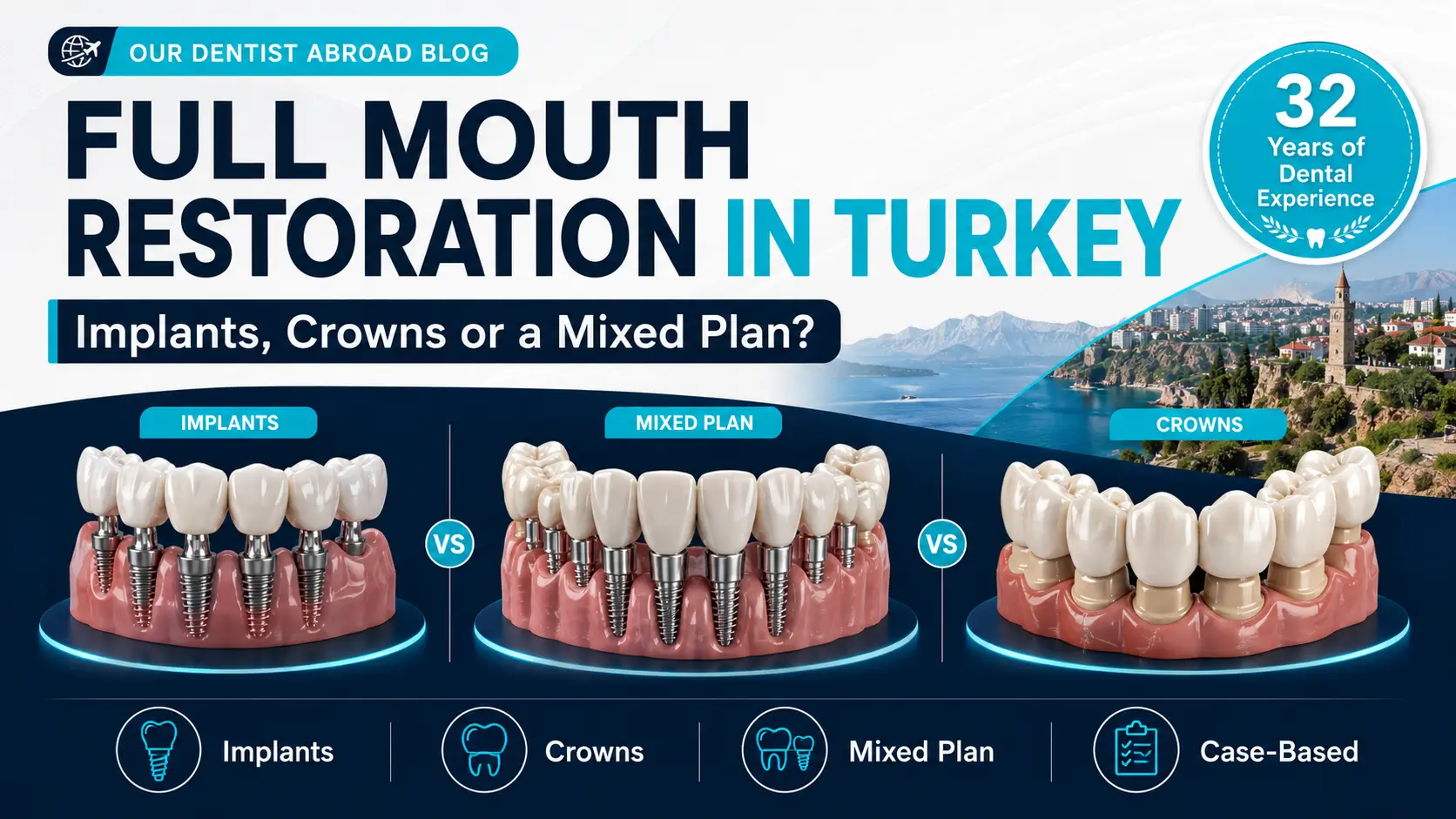
If you’re dealing with several dental problems at once — some missing teeth, a few heavily worn or broken ones, old fillings that have failed — it’s easy to assume the only realistic fix is a full set of crowns, or a full set of implants. Neither is usually true. Full mouth restoration isn’t a single fixed package; it’s a plan built tooth by tooth, based on what each one actually needs. Some of your teeth may need nothing more than a clean and a check-up.
This guide explains how a full mouth case is actually assessed, why a mixed plan is often the right answer, and what to expect from the process if your mouth needs more than one type of treatment — so you can go into your consultation with a clearer sense of what a genuinely tailored plan should look like.
What “Full Mouth Restoration” Actually Means
The term covers any treatment plan that addresses the health, function and appearance of most or all of your teeth, rather than a single tooth. It can include implants for missing teeth, crowns for teeth that are structurally weak or heavily broken down, veneers for teeth that are intact but cosmetically compromised, and sometimes bridges to close smaller gaps. The key point is that these are options within a plan — not a single treatment applied uniformly across your whole mouth.
It’s a phrase that gets used loosely in marketing, sometimes to describe a fixed “all teeth done in one package” offer. That approach can work for some patients, but it isn’t the same thing as a full mouth restoration built around your specific mouth, and the two shouldn’t be assumed to be interchangeable when you’re comparing quotes.
Why Not Every Tooth Needs a Crown
A common pattern with rushed or template-based quotes is a plan that puts a crown on every visible tooth, whether or not that tooth actually needs one. Crowns are the right choice when a tooth has lost significant structure — from large old fillings, cracks, or root canal treatment — because it needs the extra strength a crown provides. But a tooth that’s structurally sound and only cosmetically uneven is usually better served by a veneer, which requires far less preparation of your natural tooth.
Over-treating healthy teeth isn’t just unnecessary cost; it also removes tooth structure you can’t get back, and it can shift the balance of your bite in ways that create problems years later. A dentist working case by case, rather than from a package price list, will generally recommend the least invasive option that still solves the underlying problem.
Assessing Your Mouth Tooth by Tooth
A proper full mouth plan starts with a complete picture, not a quick visual check:
- Full-mouth X-rays and, where needed, a 3D scan to assess bone levels around missing teeth and the condition of tooth roots.
- A tooth-by-tooth review — which teeth are missing, which are structurally compromised, and which are healthy but affect the appearance of your smile.
- Gum health assessment, since untreated gum disease affects the long-term success of both implants and crowns.
- Bite assessment, so the finished plan functions correctly together rather than just looking right individually.
- A review of any existing dental work — old crowns, bridges or fillings — to decide what can be kept and what genuinely needs replacing.
Only once this picture is complete does it make sense to talk about which teeth need implants, which need crowns, and which don’t need anything beyond routine care. Skipping this stage in favour of a same-day quote is one of the clearest signs a plan hasn’t actually been built around your mouth.
What a Mixed Plan Can Look Like
In practice, most full mouth cases end up as a combination. A patient might need two or three implants to replace missing back teeth, crowns on four or five teeth that have failed old fillings or root canals, and veneers on the front teeth to even out shape and shade — while the remaining teeth are simply cleaned, polished and left as they are. This kind of plan takes longer to put together than a standard package, but it’s the difference between treating your mouth and treating a diagram.
With 32 years of dental experience across complex, multi-treatment cases, this is where planning matters most — sequencing implants, crowns and veneers correctly, and being honest with a patient about which teeth genuinely need work and which don’t. A mixed plan often also costs less overall than a blanket full-crown approach, simply because it avoids treating teeth that don’t need it.
How Timeline and Visits Are Affected
Mixed plans usually take more than one visit, particularly if implants are involved, since they need a healing period before a final crown can be placed. Your dentist should give you a realistic sequence — which treatments happen on which visit, and why — rather than promising everything finished in a single short trip when implants are part of the plan. Typically, the first visit covers assessment, extractions if needed, implant placement and any immediate crown or veneer work, with a second visit some months later for final implant crowns once healing is complete.
Aftercare and Long-Term Maintenance
A mixed restoration needs slightly different maintenance for each type of treatment — implants benefit from specific cleaning tools around the gumline, crowns and veneers need standard hygiene but should be checked periodically for wear, and any remaining natural teeth still need the usual preventive care. A good plan includes clear guidance on how to look after each part of your new smile, not just the treatment itself.
Getting a Plan Built Around Your Mouth
If you’re dealing with multiple issues and want an honest breakdown of what actually needs treatment versus what doesn’t, send us your recent X-rays if you have them, along with photos of your teeth and a short description of your concerns. We’ll come back with a tooth-by-tooth plan and a realistic timeline, not a one-size package.