



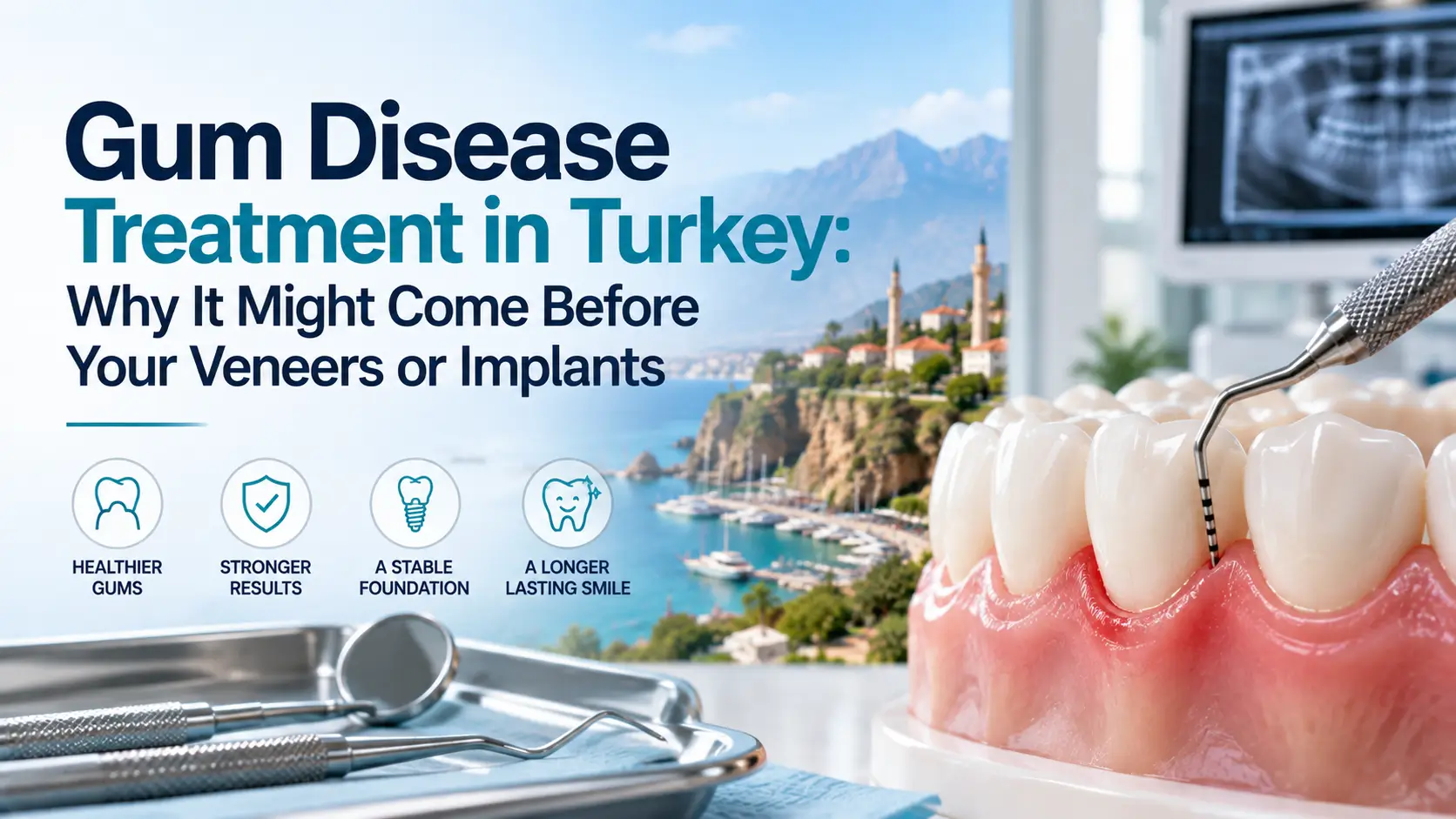
If you’ve been planning veneers or implants and your consultation suddenly shifts toward talking about your gums, it can feel like an unexpected detour from what you actually came for. In reality, gum health is the foundation everything else is built on, and a good clinic checking for it thoroughly before quoting you for veneers or implants is doing exactly what it should. This guide explains why gum disease treatment sometimes needs to happen first, how it’s diagnosed, and what the process actually involves.
Why Gum Health Is the Foundation, Not an Afterthought
Gums are the soft tissue holding your teeth and any future implants securely in place, and the bone beneath them provides the structural support both implants and your natural teeth depend on. Treating cosmetic or restorative concerns while active gum disease is present is a little like renovating a house with a compromised foundation — the visible result might look fine initially, but the underlying instability tends to surface as problems later, sometimes undermining the very treatment you invested in.
How Gum Disease Is Diagnosed
A proper assessment includes measuring the depth of the small pocket between your gum and tooth at several points around each tooth — healthy pockets are shallow, while deeper pockets indicate gum disease has begun affecting the supporting structures. This is combined with checking for bleeding on gentle probing, visible redness or swelling, and X-rays or a 3D scan to assess bone levels around your teeth or planned implant sites. None of this is guesswork; it’s a standard, measurable diagnostic process that any properly equipped clinic should be running before quoting cosmetic or implant treatment.
Why Implants Specifically Depend on Healthy Gums
Implants rely on healthy gum tissue sealing tightly around them to prevent bacteria from reaching the bone below, and on adequate bone volume to support long-term stability. Active gum disease at the time of implant placement significantly increases the risk of peri-implantitis — inflammation around the implant that can lead to bone loss and, in more advanced cases, implant failure. This is precisely why reputable clinics treat gum health as a prerequisite for implant treatment rather than something to address afterward if it becomes a problem.
Why Veneers Also Need a Gum Health Check First
It’s less obvious why veneers would depend on gum health, since they involve your existing teeth rather than the jawbone directly. The reason is twofold: inflamed or swollen gums change shape as they heal, which can throw off the fit and appearance of veneers bonded while gums were still inflamed, and veneers placed on teeth with underlying gum disease can trap plaque more easily at the margin, accelerating further gum problems. Treating gum disease first ensures your gums are in a stable, healthy shape before any cosmetic work is finalised around them.
What Gum Disease Treatment Actually Involves
Treatment depends on severity. Early-stage gum disease (gingivitis) often responds well to a thorough professional clean, sometimes called scaling and polishing, combined with improved home hygiene habits, and can resolve within a few weeks. More advanced gum disease (periodontitis) typically requires a deeper cleaning procedure called root planing, which cleans below the gumline where a standard clean can’t reach, and sometimes multiple sessions over several weeks to bring inflammation fully under control before moving on to other treatment.
How This Affects Your Treatment Timeline
If gum disease is identified during your assessment, it typically adds a preliminary phase to your overall treatment plan — sometimes a single deep-cleaning session, sometimes several sessions spread over a few weeks depending on severity. This can mean your veneers or implants are delayed by a few weeks compared to your original expectation, or occasionally split across an additional visit. While this can feel frustrating if you were hoping for a faster timeline, it’s a genuinely protective step rather than an unnecessary delay.
Signs You Might Have Gum Disease Without Realising
- Gums that bleed when brushing or flossing, even mildly.
- Persistent bad breath that doesn’t resolve with normal hygiene.
- Gums that look red, swollen, or have started to recede from the tooth.
- Teeth that feel slightly loose or have shifted position recently.
- A change in how your teeth fit together when you bite down.
Gum disease is often painless in its earlier stages, which is exactly why many patients are surprised to learn they have it during a routine dental assessment rather than noticing symptoms themselves.
What Happens If Gum Disease Is Ignored
Proceeding with veneers or implants while gum disease is active and untreated significantly raises the risk of poor outcomes — implant failure, veneers that don’t sit well against inflamed tissue, or accelerated bone loss that undermines the very treatment you’re paying for. With 32 years of dental experience assessing exactly this scenario, treating gum disease first is consistently one of the clearest examples of short-term patience protecting a much larger long-term investment.
Maintaining Gum Health After Treatment
Once gum disease has been treated and your veneers or implants are completed, keeping gums healthy long-term relies on the same fundamentals: consistent brushing and interdental cleaning, particularly around the gumline, and regular hygiene appointments to catch any early signs of recurrence. Patients who’ve had gum disease once are generally more prone to it recurring than those who’ve never had it, which makes ongoing maintenance genuinely important rather than a box ticked once and forgotten.
How Gum Disease Connects to Your Overall Health
Gum disease isn’t purely a dental issue in isolation — research has linked untreated periodontal disease to broader health concerns, including cardiovascular health and diabetes management, since chronic inflammation in the gums doesn’t stay entirely contained to the mouth. This is a further reason why a thorough clinic treats gum health as worth addressing properly, rather than viewing it solely as an obstacle standing between you and your veneers or implants.
Why This Conversation Should Happen Before You Book, Not After Arrival
Ideally, any indication of gum concerns comes up during your initial photo assessment or consultation, before you’ve booked flights or committed to specific treatment dates. Sending clear photos of your gums alongside your teeth during the initial enquiry stage — not just close-up shots of the teeth themselves — gives a clinic the best chance of flagging this early, rather than discovering it only once you’ve arrived and expected to start treatment immediately.
Does This Mean an Extra Trip?
For milder cases, gum treatment and your veneers or implant procedure can sometimes still be completed within a single, slightly extended visit, since the deep-cleaning stage doesn’t require the extended healing time an implant does. For more advanced periodontal disease, a clinic may recommend a preliminary visit dedicated to gum treatment, followed by a separate visit for the veneers or implants once your gums have had adequate time to heal and stabilise, ensuring the more significant treatment isn’t compromised by lingering inflammation.
A Step Worth Welcoming, Not Resisting
It’s understandable to feel a flicker of frustration if gum treatment adds time or steps to a plan you were hoping to complete quickly. But reframed properly, this step is a clinic actively protecting the outcome you’re paying for, rather than an obstacle standing in its way. Patients who go through gum treatment first consistently report better, longer-lasting results from their veneers or implants than those whose gum health was overlooked at the planning stage.
What a Thorough Clinic Looks Like at This Stage
A clinic taking gum health seriously will explain the specific pocket depths measured, show you where the concern areas are, and set out a clear treatment plan and timeline for addressing them before finalising your veneer or implant plan — rather than a vague mention that “your gums need a bit of work” with no further detail. This level of specificity is a good indicator that the clinic’s broader treatment planning is similarly thorough.
The Bottom Line
Gum health isn’t a hurdle standing between you and the smile you want — it’s the part of the plan that makes sure the result actually lasts. A clinic that raises it early, explains it clearly, and builds it into your timeline is doing right by your long-term outcome, even if it means a slightly different schedule than you first expected.
Getting Started
If you’re planning veneers or implants and want to understand your gum health before committing to a treatment plan, send us a few clear photos of your gums and teeth along with any concerns you’ve noticed, such as bleeding or sensitivity. We’ll give you an honest picture of whether any preliminary gum treatment is likely needed, so your overall timeline and plan are realistic from the outset.