



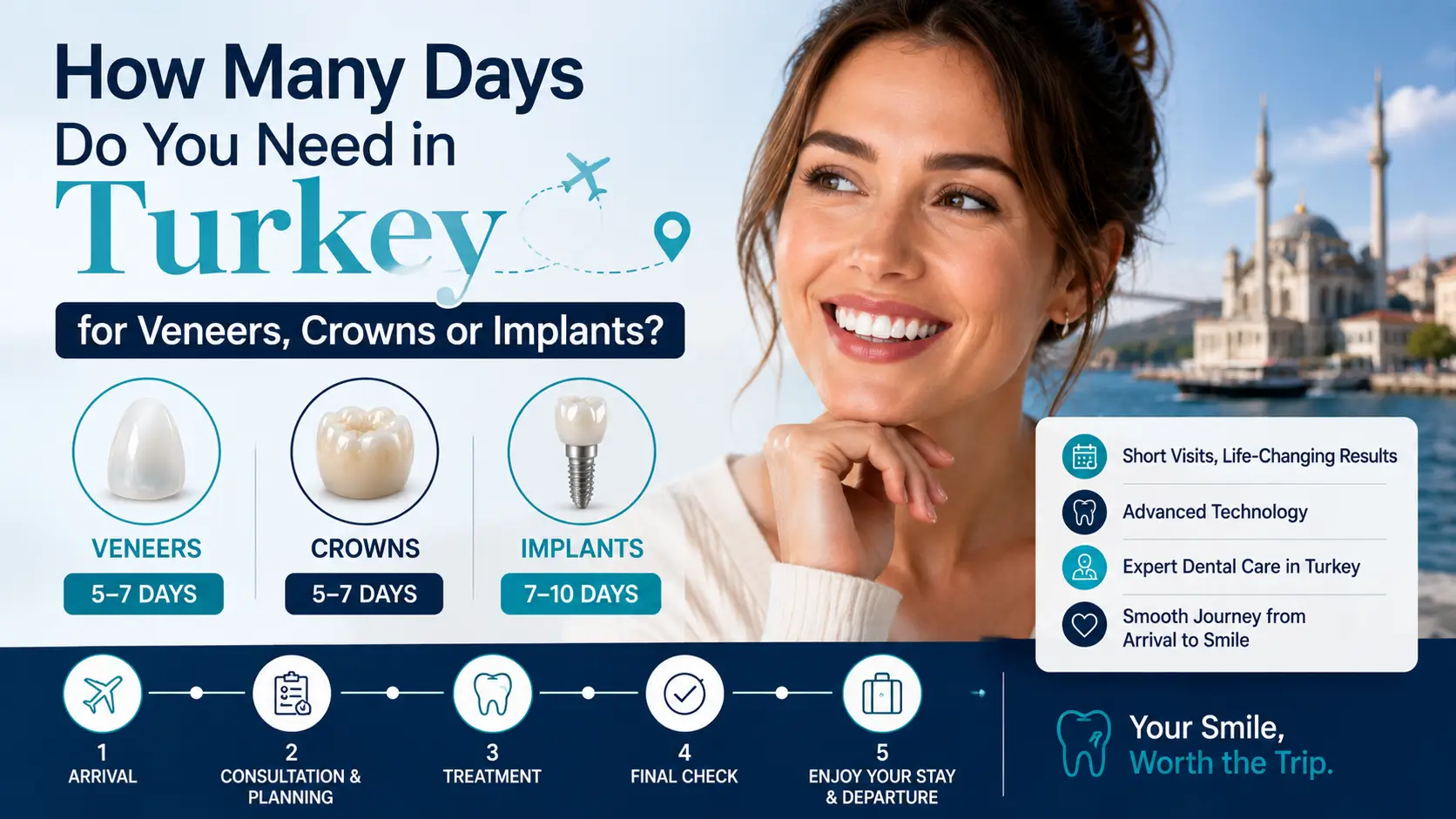
One of the most practical questions to settle before booking dental treatment in Turkey isn’t about the treatment itself — it’s about your calendar. How many days off work do you actually need to request? How many nights should you book at your hotel? The honest answer depends entirely on which treatment you’re having, since a single visit for veneers looks nothing like the two-stage trip structure needed for implants. This guide breaks down realistic day-by-day timelines for the most common treatments, so you can plan your trip properly rather than guessing.
Why Trip Length Depends Entirely on Your Treatment
Treatments that only involve your existing teeth — veneers, crowns, composite bonding — don’t require any biological healing time before the final result is fitted, which means they can usually be completed in a single visit. Treatments that involve implants require a healing period for the bone to fuse around the implant before a permanent crown or bridge can be attached, which is a biological process that can’t be rushed regardless of how a package is marketed. This single distinction is the reason trip lengths vary so widely across different treatments.
Veneers and Crowns: Typical Trip Length
For veneers or crowns on your existing teeth, most patients need between five and seven days in Turkey. This covers your initial consultation and scan, tooth preparation, a temporary set to wear while your permanent veneers or crowns are being made in the lab, and a final fitting appointment once the lab work is ready. Some clinics can compress this to four or five days for smaller cases, while larger full-smile cases involving many teeth sometimes benefit from a slightly longer stay to allow time for a mock-up review and any minor adjustments before the final bonding stage.
Single or Multiple Implants: The Two-Visit Structure
A single or multiple implant case, without a full-arch rebuild, typically requires two separate visits. The first visit, usually three to four days, covers assessment, implant placement, and fitting of a temporary tooth or teeth. You then return home and heal for a period of two to four months while the implant integrates with your jawbone. The second visit, usually three to five days, covers fitting the abutment and final crown once healing is confirmed. Altogether, this means roughly a week of total time in Turkey, split across two trips several months apart.
All-on-4 and Full-Arch Implants: A Longer First Visit
All-on-4 and similar full-arch implant treatments generally need a longer first visit, often five to seven days, since more is happening in a single appointment — implant placement across the arch, plus fitting of a full fixed temporary bridge on the same visit. As with single implants, healing then takes place at home over four to six months before a second visit of around four to five days for the final permanent bridge. This means a full-arch case typically involves nine to twelve total days in Turkey across the two visits combined.
What Happens on Each Day of a Veneer or Crown Trip
A typical five-to-seven-day veneer or crown trip might look like this: day one covers your consultation, scan and shade selection; days two and three cover tooth preparation and fitting of temporaries while your permanent restorations are milled or sent to the lab; a middle day or two often has no appointments, giving you free time to rest or explore; and the final one or two days cover fitting, bite-checking and any final polish before you fly home. Clinics vary in exactly how they sequence this, so it’s worth asking for a day-by-day plan rather than just a total number of nights.
What Happens Across an Implant Trip
On a typical implant first visit, day one is usually assessment and a 3D scan, day two is often the implant placement itself, and any remaining days allow time for a check-up before you fly home, along with rest if any grafting was needed. The second visit, months later, usually starts with a scan or X-ray to confirm healing, followed by the abutment and impression stage, with the final crown fitted a day or two later once it’s ready. Full-arch cases follow a similar structure but with more chairside time built into the first visit given the scale of the work involved.
Factors That Can Extend Your Stay
- A bone graft or sinus lift being needed, which can add healing time before implants are placed, sometimes requiring a separate earlier visit.
- Extractions needed at the same visit as implant placement, which may extend the recommended rest period before flying.
- A larger number of teeth being treated in a single visit, which can add a day or two to allow for proper mock-up review and adjustment.
- Individual healing variation, particularly for patients with certain medical conditions or smoking history, which your dentist should flag at assessment.
Planning Time Off Work and Travel Dates
For veneer or crown trips, booking a full week off work is a sensible buffer even if the clinic quotes five days, since it allows flexibility if any part of the schedule shifts. For implant cases, it’s worth thinking of the two visits as entirely separate trips on your calendar, planned three to five months apart, rather than trying to compress everything into one extended stay — the healing period genuinely cannot be shortened by staying longer on a single visit. Booking flights with some flexibility, or at minimum checking a clinic’s rebooking policy, is also worth doing in case a scan reveals additional healing time is needed before the second visit.
A Quick Reference Timeline
- Veneers or crowns: one visit, typically five to seven days.
- Single or multiple implants: two visits, three to four days plus three to five days, spaced two to four months apart.
- All-on-4 / full-arch implants: two visits, five to seven days plus four to five days, spaced four to six months apart.
With 32 years of dental experience planning trips around exactly these timelines, the most common mistake patients make is assuming implant treatment can be finished in one trip. Being clear on this from the outset makes it far easier to plan flights, time off work, and expectations properly rather than being surprised partway through treatment.
Combining a Second Trip With a Holiday
Because the second implant visit is usually shorter and less intensive than the first, some patients choose to extend it slightly and combine it with a short break, particularly if treatment is based in a resort area like Antalya. This isn’t necessary from a treatment standpoint, but it’s a practical option worth considering if you’d rather not make two purely functional trips back to back with no downtime built in.
What If Your Schedule Genuinely Only Allows One Trip
If implants are what you need but your circumstances only allow for a single visit, it’s worth having an honest conversation with your dentist about alternatives — such as a dental bridge instead of an implant for a single missing tooth, which doesn’t require a healing-period second visit. This isn’t the case for every situation, but a good clinic will discuss these trade-offs openly rather than trying to force an implant timeline into a single-trip schedule where it doesn’t genuinely fit.
Questions Worth Asking When Booking
Before confirming your travel dates, it’s worth asking your clinic for a specific day-by-day breakdown of your particular treatment plan, since the general ranges above can shift depending on how many teeth are involved or whether any preparatory work is needed. It’s also worth asking explicitly whether any additional procedures — a bone graft, extractions, or gum treatment — are likely based on your case, since these can change your first-visit length even before you’ve left home.
Arriving a Day Early: Worth Considering
Even where a clinic’s quoted timeline is tight, arriving a day before your first appointment rather than flying in the same morning gives you a buffer against delayed flights and lets you settle in before treatment begins, particularly useful if you’re nervous or travelling a long distance. This small adjustment rarely changes the overall trip length meaningfully but noticeably reduces stress on the day of your first appointment.
Getting Started
If you’re planning a trip and want a realistic, treatment-specific timeline before you book flights or request time off work, send us a short description of what you’re considering along with any X-rays or photos you have. We’ll come back with a clear day-by-day plan so you know exactly how many trips to plan for and how many days to book each time.