



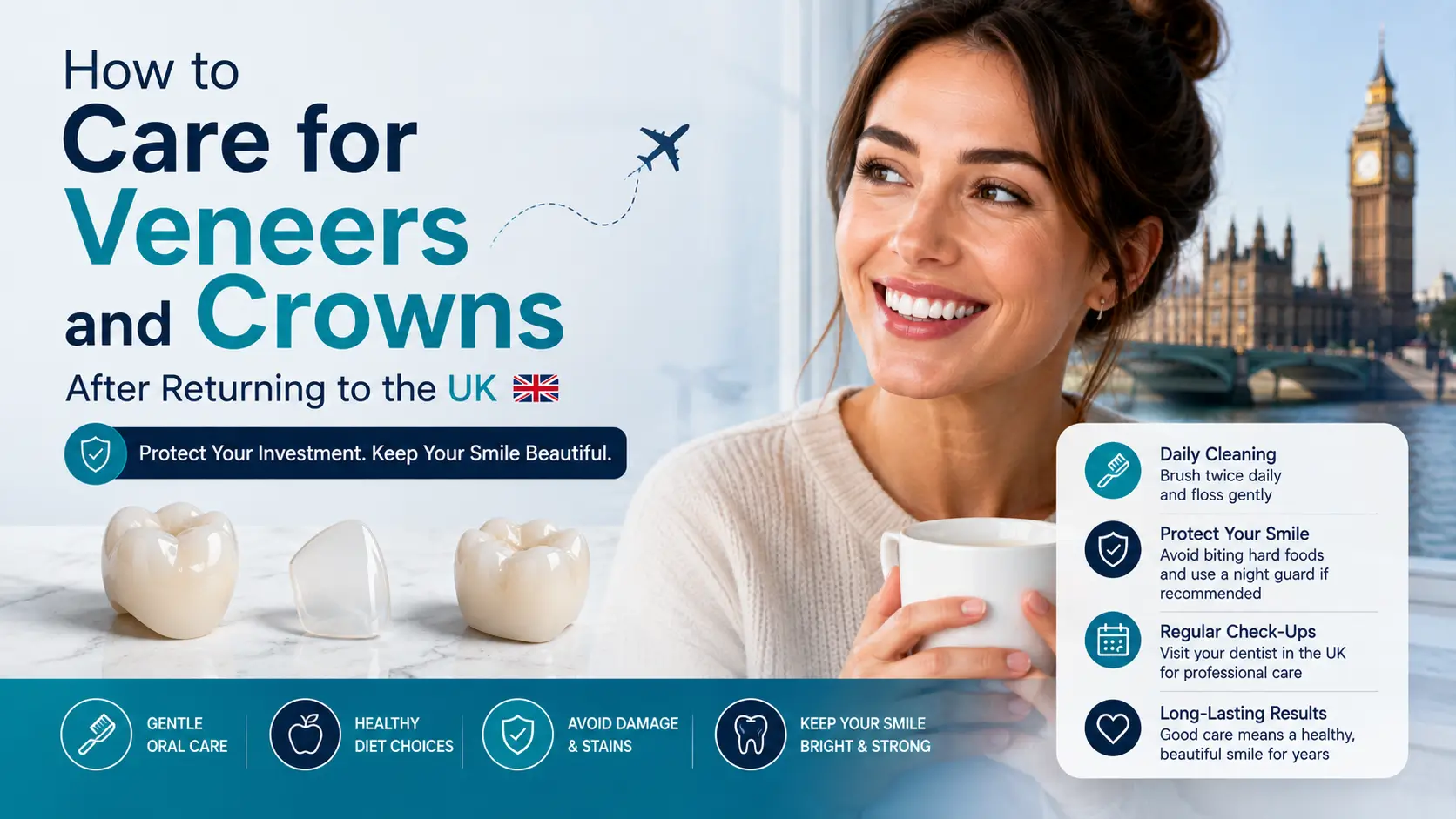
Getting your veneers or crowns fitted is really only the halfway point of the process — how you look after them once you’re back home in the UK plays just as big a role in how long they last and how well they continue to look and function. This guide covers the practical, everyday aftercare routine worth building into your life once treatment is finished, along with the signs worth keeping an eye on and when to seek attention.
The First Few Days Back Home
It’s normal for your gums to still be settling slightly around new veneers or crowns for the first week or two after fitting, and for your bite to feel subtly unfamiliar as your mouth adjusts to the new shape. Mild sensitivity to hot or cold during this window is common and typically fades on its own. Sticking to your dentist’s specific aftercare instructions during this early period — often including avoiding very hard or sticky foods for the first week — gives everything time to settle properly before you return to a fully normal routine.
Daily Cleaning Routine for Veneers and Crowns
Veneers and crowns are cared for largely like natural teeth — brushing twice daily with a fluoride toothpaste and a soft-bristled brush is the foundation of keeping them in good condition. It’s worth paying particular attention to the margin where a crown meets your natural tooth, and the gumline around veneers, since these areas are where decay or gum irritation are most likely to develop if plaque is allowed to build up over time. An electric toothbrush with a gentle pressure sensor can help avoid brushing too hard, which is a common habit that can wear away at both natural enamel and restoration surfaces over the years.
Flossing and Interdental Brushes: Getting the Technique Right
Standard flossing remains important around both veneers and crowns, though it’s worth being gentle when flossing near a veneer’s edge to avoid dislodging the bonding over time. Interdental brushes, sized appropriately for the gaps between your teeth, are particularly useful around crowns and bridges where standard floss can be harder to manoeuvre. If you’re unsure of the right technique or interdental brush size for your specific restorations, it’s worth asking your UK dentist or hygienist to demonstrate at your next visit rather than guessing.
Night Guards: Why They Matter So Much
If you were advised to wear a night guard after your treatment, this is one of the single most important habits for protecting your investment long-term. Grinding or clenching during sleep places repeated, concentrated force on veneers and crowns that they aren’t designed to withstand indefinitely without protection, and it’s one of the most common preventable causes of chips, cracks or loosening over the years. Wearing the guard consistently, cleaning it regularly, and having it checked or replaced as needed are simple habits that meaningfully extend the life of your restorations.
Booking a UK Hygiene Appointment
It’s worth booking a routine hygiene appointment with a UK dentist within a few months of returning home, both to establish a baseline check of how everything has settled and to build regular six-monthly visits into your ongoing care. Bringing any paperwork from your Turkish clinic — treatment details, materials used, aftercare instructions — makes this first UK visit far more useful, since your dentist can assess your specific restorations with full information rather than working it out from scratch.
Foods and Habits Worth Avoiding
- Biting directly into very hard foods — ice, boiled sweets, unshelled nuts — which can chip veneers or crowns even years after fitting.
- Using your teeth as tools to open packaging, tear tape, or hold objects.
- Prolonged exposure to staining drinks like coffee, tea and red wine, particularly relevant for composite-based work.
- Smoking, which affects gum health around crowns and can contribute to staining over time.
- Skipping your night guard on “just one night,” since grinding damage tends to build up gradually rather than happening all at once.
Signs Something Might Need Attention
A few signs are worth acting on rather than waiting out: persistent sensitivity beyond the first couple of weeks after fitting, a veneer or crown that feels loose or shifts slightly under pressure, visible chips or cracks however small, or gum bleeding and swelling specifically around a treated tooth. None of these are necessarily serious, but catching them early with a prompt dental visit is always simpler and less costly than waiting until a small issue becomes a bigger one.
Staying in Touch With Your Turkey Clinic
Most reputable clinics remain reachable after you’ve returned home and will want to know if something feels wrong with your treatment, both to help you directly and because ongoing patient outcomes matter to how they refine their own process. With 32 years of dental experience supporting patients well beyond the day they fly home, this kind of continued availability — a WhatsApp line, email, or scheduled video check-in — is one of the clearest signs of a clinic that stands behind its work rather than considering the relationship over once you’ve left the country.
Building Aftercare Into Your Routine Long Term
The most successful long-term outcomes tend to come from patients who fold these habits into their existing routine rather than treating them as a separate, effortful task — brushing technique, interdental cleaning and night guard use become second nature within a few weeks for most people. Treating your veneers or crowns with the same unremarkable, everyday care you’d give your natural teeth is, genuinely, the most effective long-term strategy available, more so than any single specialist product or occasional deep-clean effort.
Adapting Your Diet Slightly at First
While veneers and crowns don’t require the extended soft-food period implants do, it’s still sensible to avoid biting directly into very hard or sticky foods for the first week or two while everything settles, particularly for crowns on back teeth doing significant chewing work. After this initial settling period, most patients return to eating completely normally, with the only ongoing consideration being the ordinary precautions around very hard foods and objects that apply to any dental restoration long-term.
Keeping Records for Future Dental Visits
It’s genuinely useful to keep a simple written record of which teeth were treated, which materials were used, and the date of your treatment. This makes every future UK dental visit more efficient, since your dentist can immediately understand what they’re looking at rather than starting from scratch, and it’s particularly valuable if you ever need any adjustment, repair or replacement work done by a different provider down the line.
Mouthwash and Additional Products Worth Considering
An alcohol-free antibacterial or fluoride mouthwash can be a useful addition to your routine, particularly in the weeks immediately after treatment, though it shouldn’t replace brushing and interdental cleaning. If you’re prone to staining, ask your hygienist whether a specific toothpaste formulated for restorations is worth using, since some whitening toothpastes contain abrasives that are more suited to natural enamel than to veneer or crown surfaces.
Adjusting to Your New Bite
It’s worth giving yourself a little time to adjust to how your bite feels with new veneers or crowns in place, particularly if several teeth were treated at once. Minor bite adjustments are a normal part of settling in during the first couple of weeks, and it’s worth mentioning any persistent unevenness to your dentist rather than assuming it will resolve on its own, since an uneven bite left unaddressed can place uneven pressure on individual restorations over time.
Travel and Air Pressure Considerations
If you’re flying again soon after your treatment, it’s worth knowing that recently placed veneers or crowns don’t typically react to cabin pressure changes the way a very recent extraction or implant site might. That said, if any mild sensitivity persists, it’s generally more noticeable on a flight simply due to pressure changes affecting the sinuses and surrounding areas, rather than anything specific to the restoration itself, and it usually settles again once you’re back on the ground.
A Simple Weekly Check
A quick, thirty-second self-check once a week — running your tongue gently over each restoration, glancing in the mirror for any visible change, and noting any new sensitivity — costs nothing and catches most early issues well before your next scheduled hygiene visit, making it one of the simplest habits worth adopting alongside your daily brushing routine.
Getting Started
If you’ve recently had veneers or crowns fitted in Turkey and want tailored aftercare guidance for your specific case, send us a note on which teeth were treated and any questions or concerns you have since returning home. We’ll talk you through a practical care routine and let you know what’s worth keeping an eye on as the weeks and months go by.