



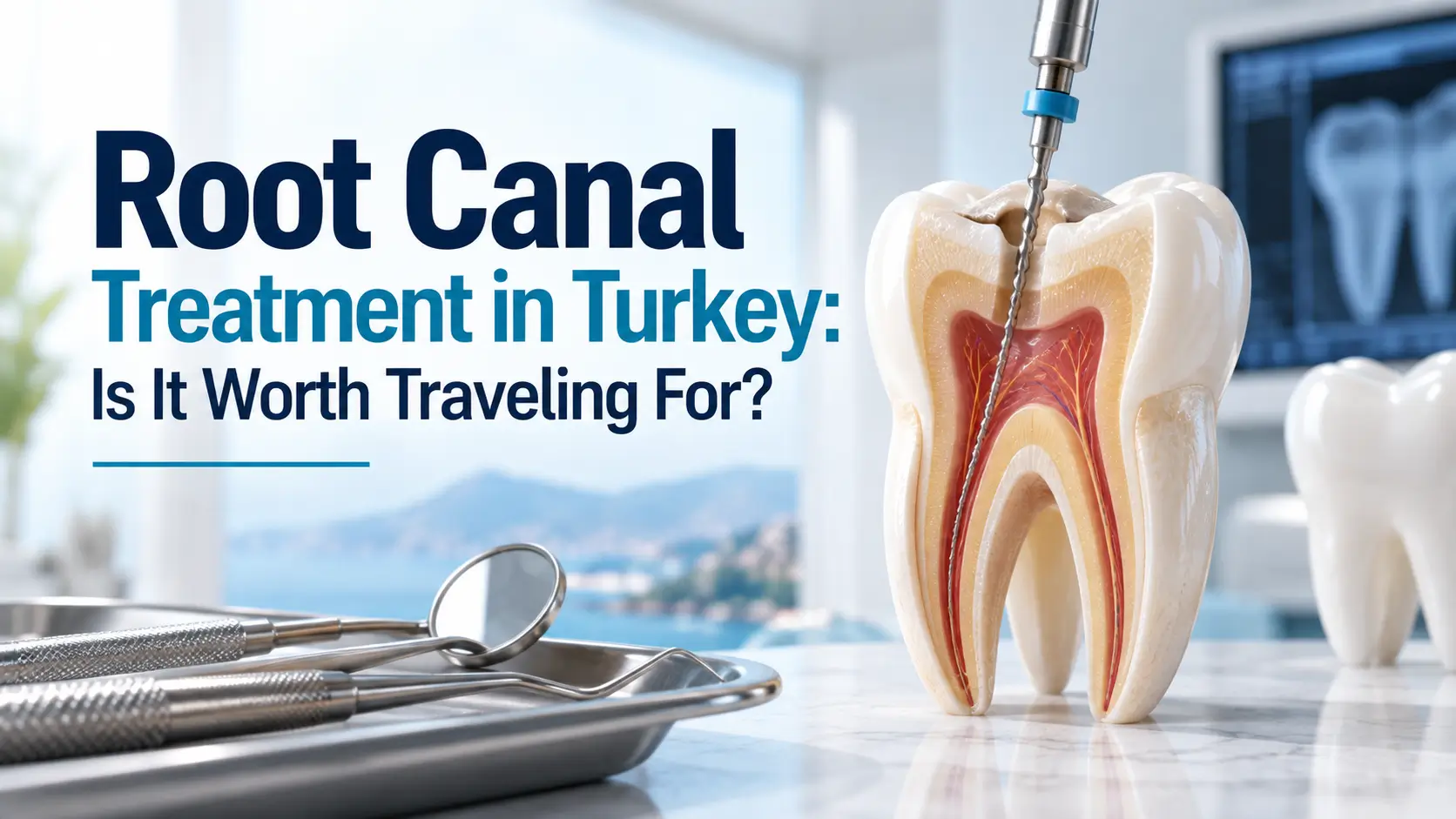
Root canal treatment doesn’t get nearly as much attention in dental tourism conversations as veneers or implants, yet it’s one of the most common procedures patients need, often discovered only once they’re already planning other work. If you’ve been told you need a root canal and you’re also considering treatment in Turkey for other reasons, it raises a genuinely practical question: is this something worth including in your trip, or is it better handled locally in the UK first? This guide walks through what root canal treatment actually involves and when travelling for it makes sense.
What a Root Canal Actually Involves
A root canal treats infection or severe inflammation inside a tooth’s pulp — the soft tissue containing nerves and blood vessels at the tooth’s core. The dentist removes the infected or damaged pulp, thoroughly cleans and disinfects the inner canal system, then fills and seals it to prevent further infection. The tooth is then almost always protected with a crown afterward, since a root-treated tooth becomes more brittle and prone to fracture without that extra reinforcement. The procedure itself typically takes one to two appointments, depending on the complexity of the tooth’s root canal system.
Root Canal vs Extraction: Why Saving the Tooth Usually Wins
When a tooth is badly infected, the two realistic options are usually a root canal or an extraction. Removing the tooth is faster and cheaper in the short term, but it creates a gap that eventually needs addressing with an implant or bridge if you want to avoid the drifting, bite changes and bone loss that follow a missing tooth over time. A root canal, by contrast, preserves your natural tooth root and structure, which is almost always the preferable outcome when the tooth can realistically be saved. Dentists generally recommend extraction only when the tooth is too severely damaged, fractured below the gumline, or has insufficient remaining structure to support a crown afterward.
Why Root Canal Treatment Is Rarely a Standalone Reason to Travel
Root canal treatment is widely available, relatively quick, and often urgent by nature — which makes it a poor fit as the sole reason for booking a trip abroad. If a tooth is actively infected and causing pain, waiting weeks or months to travel isn’t advisable; this is treatment that generally needs addressing promptly wherever you are. For this reason, root canal treatment in Turkey usually comes up in one of two contexts: as part of a broader treatment plan that includes other work like crowns, veneers or implants, or as emergency care needed while you happen to already be travelling.
When It Does Make Sense to Include in a Turkey Trip
If you’re already planning to travel for a full mouth restoration, multiple crowns, or a broader smile makeover, and one of your teeth needs root canal treatment as part of that plan, it makes complete sense to have it done during the same trip rather than arranging it separately beforehand. This is a common and sensible way root canal treatment features in dental tourism — not as a destination procedure in its own right, but as one component of a larger, well-planned visit.
What Happens During Root Canal Treatment in Turkey
The process mirrors what you’d expect anywhere: an X-ray or 3D scan to assess the tooth’s root structure and confirm the extent of infection, local anaesthetic to ensure the procedure is comfortable, careful cleaning and shaping of the root canal system, and a filling material to seal the space once cleaned. If the tooth needs a crown afterward — which is standard for back teeth in particular — this is typically planned as a follow-up step either later in the same visit or shortly after, depending on how the rest of your treatment is sequenced.
How Much Does It Cost Compared to the UK
Root canal treatment in Turkey is typically priced significantly lower than equivalent private treatment in the UK, even before factoring in that it’s rarely booked as a standalone trip. When it’s combined with other planned treatment, the cost saving becomes part of the overall value of the trip rather than a separate calculation, since you’re not paying for additional travel specifically to have this one procedure done.
Root Canal Then Crown: Understanding the Full Process
It’s worth understanding that root canal treatment and the crown that typically follows it are two connected but distinct stages. The root canal addresses the infection itself; the crown protects the now more fragile tooth structure from fracturing under normal biting force. Skipping the crown after a root canal, particularly on a back tooth doing significant chewing work, meaningfully increases the risk of the tooth cracking later, which is why a complete treatment plan should always account for both stages rather than treating the root canal as the final step.
Emergency Dental Situations: What to Do If You’re Already Traveling
If you develop sudden, severe tooth pain while already in Turkey for other treatment, or during an unrelated holiday, most established dental clinics can see emergency patients quickly, often within the same day. Severe, throbbing pain, visible swelling, or pain that worsens with hot or cold are all signs worth having assessed promptly rather than waiting, since an untreated infection can spread and become considerably more serious and costly to treat if left unaddressed.
Aftercare Once You’re Back in the UK
After a root canal and crown, it’s worth keeping up with your usual UK dental check-ups to monitor the treated tooth over time, since root-treated teeth occasionally need re-treatment years later if a new infection develops around the root tip. Mild sensitivity in the days following treatment is normal and typically settles quickly; ongoing pain, swelling or a bad taste around the treated tooth weeks later is worth having checked promptly rather than assumed to be normal healing.
Signs You Might Need a Root Canal
- Persistent or throbbing pain in a specific tooth, especially when biting down.
- Sensitivity to hot or cold that lingers well after the stimulus is removed.
- Swelling or tenderness in the gum near a specific tooth.
- Darkening or discolouration of a single tooth.
- A small, recurring pimple-like bump on the gum near the affected tooth.
Why Some Teeth Can’t Be Saved
Occasionally, a scan reveals a tooth too severely fractured, decayed, or structurally compromised for a root canal to realistically succeed, even though the infection itself could technically be treated. In these cases, extraction followed by a planned implant or bridge becomes the more sensible long-term option, since attempting to save a tooth with insufficient remaining structure often leads to failure regardless of how well the root canal itself is performed. A dentist recommending extraction over a root canal in this situation isn’t taking a shortcut — they’re avoiding setting you up for a second procedure later.
Is the Procedure Painful?
A common misconception is that root canal treatment itself is painful — in reality, the procedure is performed under local anaesthetic and is generally no more uncomfortable than having a filling placed, since the actual point of the treatment is to remove the source of pain rather than create new discomfort. Mild soreness for a day or two afterward as the area settles is normal and manageable with standard over-the-counter pain relief.
What to Mention When You Book Combined Treatment
If you know or suspect a tooth needs a root canal alongside other planned work, mentioning this clearly during your initial enquiry helps the clinic build an accurate treatment sequence and timeline from the start, rather than adjusting the plan on the day you arrive. This is particularly relevant if the tooth needing root canal treatment is also due to receive a crown or veneer as part of your broader plan, since the sequencing of these steps matters for a smooth, well-organised visit.
A Small Procedure With a Big Long-Term Payoff
Root canal treatment rarely gets the attention it deserves precisely because it’s not cosmetic and doesn’t transform your smile the way veneers or implants do. But saving a natural tooth that would otherwise need extraction has real long-term value — it avoids the cost, time and bone-loss considerations of eventually needing an implant, and it keeps your natural bite intact. Viewed this way, it’s one of the most cost-effective procedures in dentistry, whether it happens at home or as part of a broader trip abroad.
Getting Started
If you have a tooth that needs root canal treatment and you’re also considering other dental work in Turkey, send us details of your situation along with any X-rays you have. We’ll help you understand whether combining the treatments into a single trip makes sense for your specific case, and give you a clear cost and timeline picture either way.