



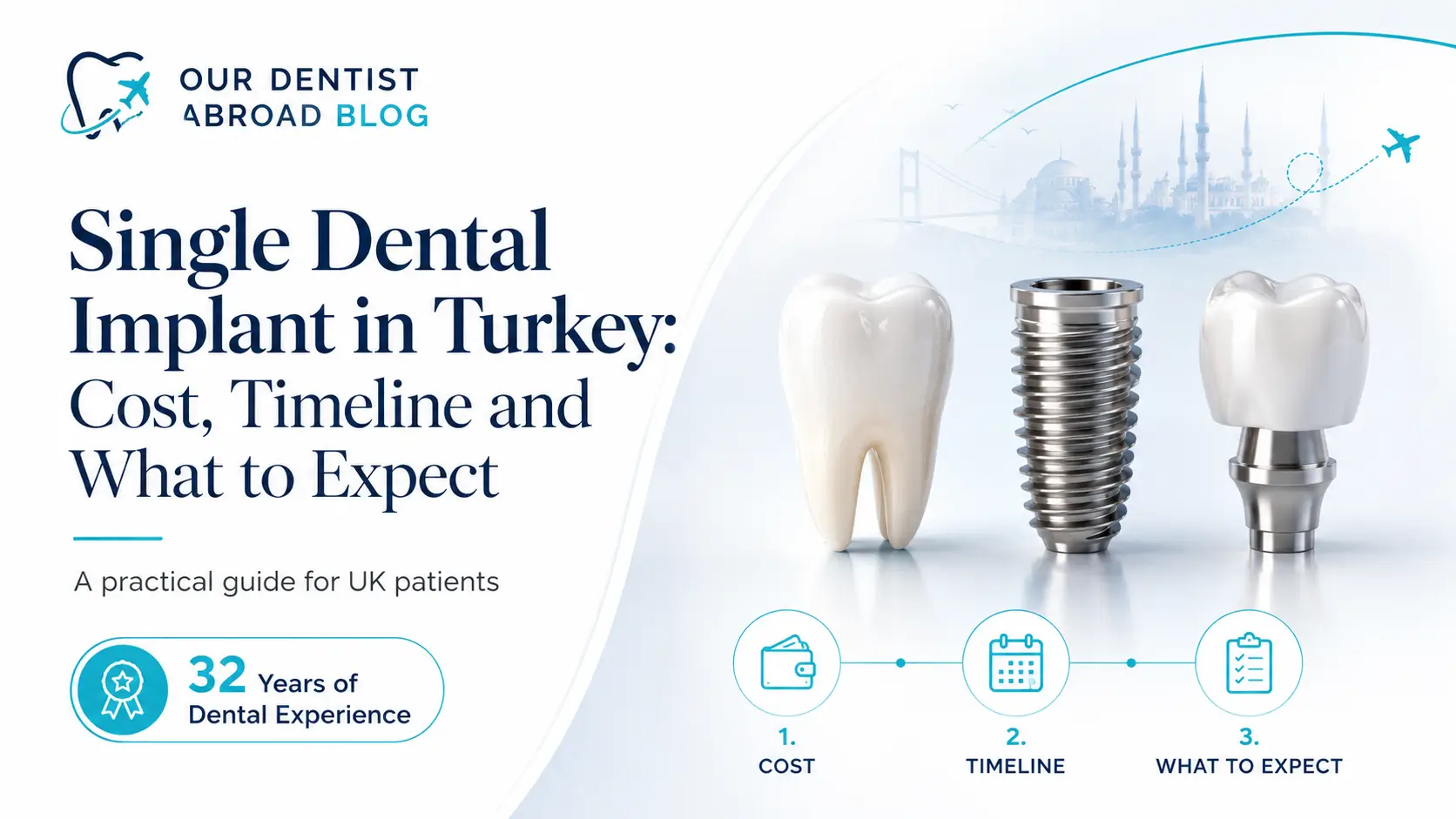
Losing a single tooth is more common than people expect — an old root canal that eventually fails, a crack from years of wear, or an extraction after an infection that couldn’t be saved. Whatever the cause, most UK patients researching a replacement quickly land on the same question: what does a single dental implant in Turkey actually involve, from the first consultation through to the finished tooth, and what should it realistically cost? This guide walks through the full process step by step, so you know exactly what to expect before you book anything.
A single implant is one of the most predictable and well-understood procedures in modern dentistry, but the timeline and pricing still catch people out because they’re often quoted in vague, package-style terms rather than explained stage by stage. Understanding each part of the process makes it much easier to compare quotes properly and to plan your travel dates with confidence.
Why a Single Missing Tooth Still Needs Proper Treatment
It’s tempting to think that one missing tooth, especially a back tooth that isn’t visible when you smile, isn’t worth the time and cost of an implant. In practice, leaving a gap unaddressed causes problems that tend to get worse the longer they’re left. Neighbouring teeth gradually drift into the space, your bite can shift out of alignment, and the opposing tooth in your other jaw can over-erupt since it no longer meets resistance when you bite down. Bone in the area where the tooth was lost also begins to shrink over time without a tooth root there to stimulate it, which can make treatment more complex if you wait several years.
An implant is currently the only replacement option that replaces the root as well as the visible tooth, which is why it’s usually recommended as the long-term solution rather than a temporary fix.
What Happens on Your First Visit
Your first appointment starts with a clinical examination and a 3D scan of the jaw in the area of the missing tooth. This scan tells your dentist the exact bone height and width available, which determines whether a standard implant can be placed immediately or whether additional preparation is needed first. Assuming the bone is suitable, the implant — a small titanium post — is placed into the jawbone under local anaesthetic in a procedure that typically takes between thirty and sixty minutes for a single tooth.
You’ll usually be given a temporary tooth or a small removable option to wear while the permanent crown is being made, so you’re not left with a visible gap during the healing period, particularly important for front teeth. Post-procedure discomfort is generally mild and manageable with standard painkillers, and most patients are able to fly home within a day or two of this first stage.
The Healing Period: What to Expect Week by Week
The weeks after implant placement are when osseointegration happens — the process where the bone gradually fuses to the surface of the implant, creating a stable foundation for the crown. In the first week, mild swelling and tenderness are normal and settle quickly with basic aftercare. By two to four weeks, most patients are back to their normal routine with no visible sign anything happened, aside from any temporary tooth in place.
Full osseointegration typically takes between two and four months, sometimes a little longer in the upper jaw where bone is naturally softer, or if a bone graft was needed. This is not a stage that can be rushed safely — attempting to fit a final crown before the implant has properly integrated significantly increases the risk of early failure, so a dentist working to a sound timeline will always build this healing window into your plan rather than skip it for convenience.
The Second Visit: Abutment and Final Crown
Once healing is confirmed, usually with a follow-up scan or X-ray, you’ll return for the second and final stage. This involves attaching a small connector piece called an abutment to the implant, taking a digital or physical impression, and fitting your final crown — typically made from zirconia or E-max for a natural, durable result. This second visit is usually much shorter than the first, often completed within a few days, which makes it possible to combine it with a short trip rather than an extended stay.
At the end of this visit, your dentist should check your bite carefully to make sure the new crown meets your other teeth correctly, since even small discrepancies here can cause discomfort or uneven wear over time if left uncorrected.
How Much Does a Single Dental Implant Cost in Turkey?
Pricing varies by clinic, implant brand and the crown material used, but a genuinely single, straightforward implant case in Turkey is typically priced at a fraction of equivalent private treatment in the UK, even once flights and accommodation are factored in. What matters most when comparing quotes is understanding exactly what’s included:
- The implant fixture itself, and which manufacturer’s brand is being used.
- The abutment and final crown, and the crown material specified.
- The 3D scan and any X-rays required for planning and follow-up.
- Whether a bone graft or sinus lift is included if your case needs one, since these are sometimes quoted separately.
- Whether a temporary tooth is included for the healing period.
A low headline price that excludes several of these items can end up costing more once everything is added, which is why an itemised quote is always worth requesting before you compare clinics on price alone.
Timeline Overview: How Many Trips and How Long
For most single implant cases, the process is completed across two visits to Turkey. The first covers assessment and implant placement, typically a stay of two to four days. After a healing period of two to four months at home, the second visit covers the abutment and final crown, usually a stay of three to five days. Some clinics can compress this into fewer overall days by scheduling scans and prep work efficiently, but the biological healing time between visits can’t be shortened regardless of how a package is marketed.
What Could Extend Your Timeline
Not every case follows the standard two-visit pattern. If a scan shows insufficient bone at the implant site, a bone graft may be needed first, which typically adds three to six months of additional healing before the implant itself can be placed. Similarly, a sinus lift may be required for upper back teeth where the sinus cavity sits close to the jawbone. These additional steps aren’t a sign of a problem — they’re a sign of proper planning, since placing an implant into insufficient bone is one of the most common causes of long-term implant failure.
With 32 years of dental experience across single and complex implant cases, this is exactly the kind of detail that should be flagged clearly at your very first assessment, rather than discovered partway through treatment once you’ve already committed to a fixed schedule.
Aftercare and Long-Term Success
Once your final crown is fitted, a single implant needs the same care as a natural tooth, plus a little extra attention around the gumline where the implant meets the gum tissue. Daily brushing, interdental cleaning designed for implants, and routine dental check-ups back home are usually all that’s needed to keep it functioning well for many years. Most well-placed single implants last well over a decade, and many last a lifetime with consistent care, making the upfront investment a genuinely long-term one rather than a temporary fix.
Comparing This Against UK Private Pricing
For context, a single private implant in the UK typically costs several times more than the equivalent treatment in Turkey, even for the same implant brands and crown materials used by reputable UK clinics. This is largely down to differences in clinic overheads, lab costs and the broader cost of running a dental practice, rather than any difference in the underlying procedure itself. Even after factoring in flights and a hotel stay for two short trips, most patients still find the total cost considerably lower than treatment closer to home — which is exactly why a single implant is one of the most commonly requested procedures among UK patients travelling for dental care.
Questions Worth Asking Before You Commit
Before booking, it’s reasonable to ask which implant brand will be used, what the crown material is and why it was chosen for your case, whether a bone graft or sinus lift is likely based on your scan, and exactly how many visits and days are needed at each stage. A clinic with genuine experience will answer each of these specifically rather than with a generic reassurance that “it’s all included.”
Getting Started
If you’re missing a single tooth and want a clear, itemised understanding of your options, send us a recent X-ray if you have one, along with a short description of when the tooth was lost and any symptoms you’re experiencing. We’ll come back with an honest assessment of your suitability, a realistic two-visit timeline, and a full cost breakdown so you know exactly what you’re paying for.