



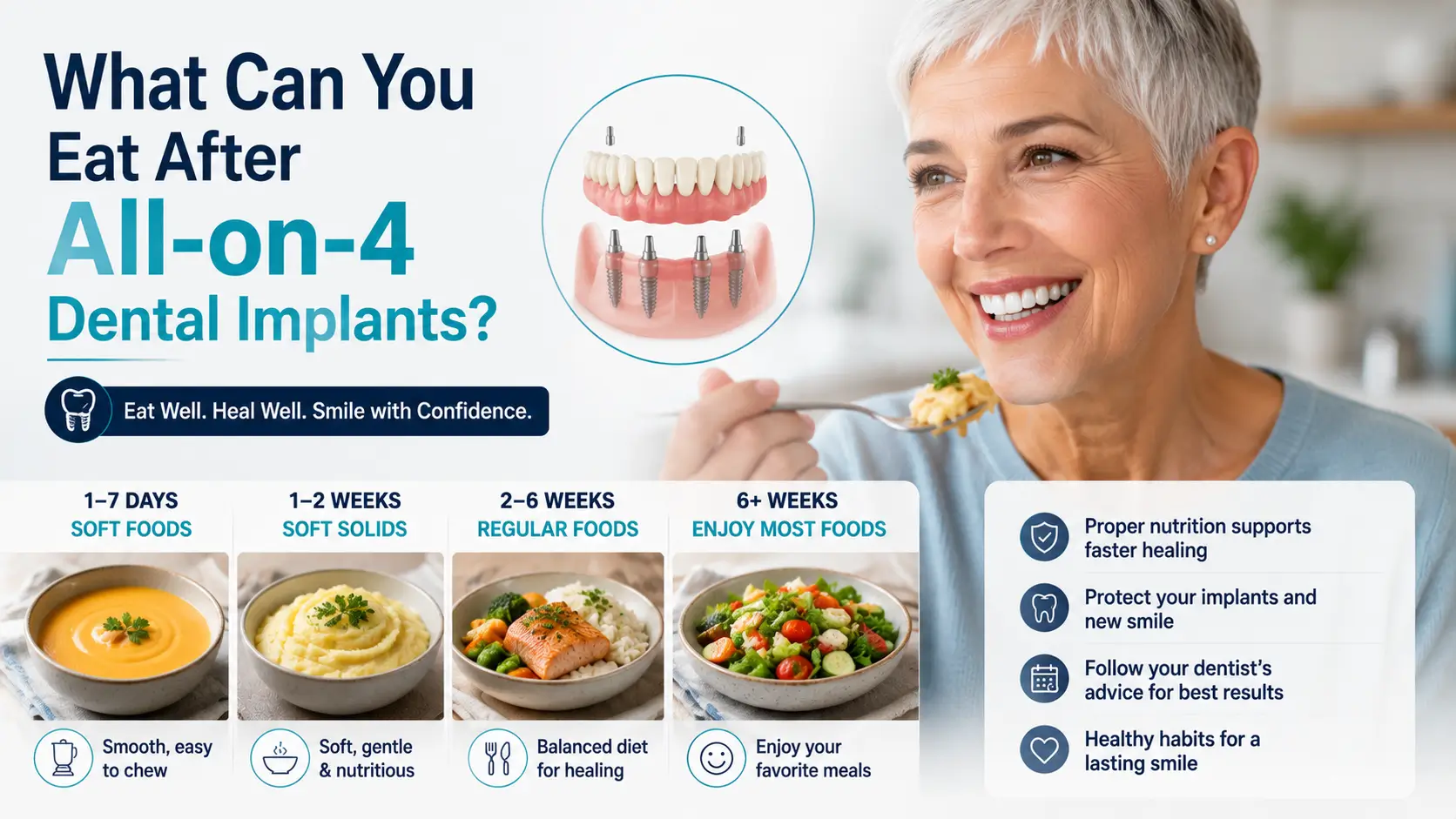
Food is one of the first things people worry about after All-on-4 surgery, and understandably so — you’re adjusting to a full new set of fixed temporary teeth while your implants heal underneath. General implant recovery advice doesn’t fully apply here, since All-on-4 involves a full arch rather than a single tooth, and the temporary bridge you’ll be wearing has its own specific considerations. This guide breaks down exactly what to eat at each stage of recovery, from the first 48 hours through to your return to a more normal diet.
Why All-on-4 Recovery Diet Differs From a Single Implant
With a single implant, you’re usually chewing normally on the rest of your natural teeth while just one area heals. With All-on-4, your entire bite is resting on a brand new fixed temporary bridge across the whole arch, which means every bite you take puts some pressure on the healing implants underneath. This is why All-on-4 recovery calls for a more deliberate, staged approach to food texture rather than simply avoiding hard foods near the treatment site.
The First 48 Hours: What to Eat
Immediately after surgery, stick to cold or room-temperature liquids and very soft foods that require no chewing at all — think smoothies, yoghurt, blended soups once they’ve cooled, and protein shakes. Cold foods and drinks in the first day can also help manage swelling. Avoid using a straw, since the suction can disturb healing tissue at the surgical sites. Eating little and often, rather than large meals, tends to be more comfortable during this initial window when your mouth is still numb or tender.
Days 3 to 7: Introducing More Texture
As the initial tenderness eases, you can gradually move to soft, mashable foods that need minimal jaw movement — mashed potato, scrambled eggs, well-cooked pasta, porridge, and soft fish. Everything should still be soft enough to break apart with a fork rather than requiring real chewing. Cutting food into small pieces and eating slowly reduces unnecessary pressure on the temporary bridge while your gums continue settling.
Weeks 2 to 4: The Temporary Teeth Period
By the second week, most patients can move on to slightly firmer soft foods — well-cooked vegetables, soft casseroles, tender slow-cooked meat, and similar dishes that still don’t require significant biting force. This period can extend for several weeks depending on your individual healing progress, and it’s worth remembering that the goal throughout isn’t just comfort — it’s protecting the implants from excessive force while osseointegration is still underway beneath the surface.
Foods to Avoid During the Temporary Teeth Phase
- Hard foods: nuts, hard crusty bread, boiled sweets, ice.
- Sticky or chewy foods: toffee, chewing gum, dried fruit, tough cuts of meat.
- Crunchy foods: raw carrots, apples, crisps, hard crackers.
- Very hot foods and drinks in the first few days, since sensation may be reduced and burns can go unnoticed.
- Small seeds or husks, such as those in some breads or fruits, which can lodge around the temporary bridge and gum tissue.
Sample Meal Ideas by Stage
In the first 48 hours: a blended vegetable soup, a fruit and yoghurt smoothie, or a protein shake. In days three to seven: scrambled eggs with soft avocado, mashed sweet potato, or well-cooked oatmeal. In weeks two to four: soft fish pie, slow-cooked chicken in a casserole, or well-cooked pasta with a smooth sauce. Having a few go-to meals planned in advance for each stage takes the guesswork out of daily cooking during a period when you’d rather not be improvising.
Staying Nourished Without Solid Chewing
A soft-food diet doesn’t have to mean a nutritionally poor one. Smoothies can carry protein powder, nut butter (blended smooth), and vegetables; soups can be packed with lentils, beans and vegetables for fibre and protein; and dairy or dairy alternatives like yoghurt and milk-based drinks help maintain calcium intake. Planning meals around nutrient-dense, blendable or mashable ingredients rather than defaulting to plain, low-nutrition soft foods makes the weeks of recovery considerably easier on your energy levels.
When You Can Return to a Normal Diet
Full osseointegration for All-on-4 typically takes four to six months, but this doesn’t mean you’re eating a fully soft diet the entire time — most patients progress steadily from the very restrictive first weeks to a much wider range of foods well before the final permanent bridge is fitted. The clearest and safest marker for returning to a fully normal diet is the fitting of your final bridge, at which point your dentist will confirm what you can comfortably return to. Until then, gradually testing slightly firmer foods as tenderness continues to improve, while still avoiding anything very hard or crunchy, is the general pattern most patients follow.
Signs You’re Progressing Too Fast or Too Slow
If you notice increased discomfort, looseness in the temporary bridge, or bleeding after introducing a firmer food, that’s a sign to step back to softer textures for a few more days and mention it at your next check-in. On the other hand, if you’re still finding it difficult to manage basic soft foods well beyond the first couple of weeks, it’s worth flagging this too, since ongoing significant discomfort isn’t typical and is worth having assessed rather than simply pushed through.
Adjusting the Diet for Different Appetites
Not everyone finds soft foods equally satisfying, and it’s common for appetite to dip slightly during the first couple of weeks simply because meals feel less varied than usual. Adding flavour through herbs, spices, sauces and gravies to soft dishes helps keep meals appealing rather than bland, and rotating between a handful of different soup, smoothie and mash-based meals prevents the sense of eating the same thing on repeat, which can otherwise make sticking to the diet feel harder than it needs to be.
Hydration and the First Week
Staying well hydrated matters more than people expect during the first week, both for general healing and because reduced saliva flow from painkillers or simply eating less can make your mouth feel drier than usual. Water, herbal teas once cooled, and diluted juices are all good options; carbonated drinks are best avoided in the first few days since the fizz can be uncomfortable against healing gum tissue, and very acidic juices can occasionally irritate sensitive areas.
Managing Meals Around Medication
If you’ve been prescribed antibiotics or pain relief, it’s worth checking whether they need to be taken with food, since some medications can cause nausea on an empty stomach. Having a light, soft snack ready before taking any tablets — even something as simple as a few spoonfuls of yoghurt — can make the first few days considerably more comfortable, particularly if your appetite is naturally reduced following surgery.
Family Meals and Eating Socially
Many patients worry about how to manage eating socially or with family during recovery, particularly over a longer stretch like the first month. A practical approach is to eat the same base meal as everyone else but adjusted in texture — for example, the same casserole cooked until very tender, or the same vegetables mashed rather than left whole — which keeps mealtimes feeling normal and shared rather than isolating, without compromising on the soft-food requirements your healing implants need.
A Note for Denture Wearers Making the Switch
If you’re moving to All-on-4 from years of wearing a loose, removable denture, the recovery diet may actually feel like an improvement rather than a restriction, since a fixed temporary bridge holds far more securely than a denture ever did, even on soft foods. Many patients in this situation find they can manage a wider range of textures more confidently during recovery than they could with their old denture, simply because the bridge doesn’t shift or lift while chewing.
Planning Ahead for Your Return Home
It’s worth stocking your kitchen with a few weeks of soft-food staples before your trip, since shopping and meal prep are the last things most patients want to deal with in the days immediately after surgery. A freezer stocked with a few portions of soup or a soft casserole made in advance can make a genuine difference to how manageable the first week feels once you’re back and settling into recovery.
Getting Started
If you’re preparing for All-on-4 treatment and want a clear, stage-by-stage understanding of what daily eating will actually look like, send us a note on your current situation and any questions you have about the recovery period. We’ll walk you through exactly what to expect at each stage, so you can plan your kitchen and your first few weeks with confidence.