



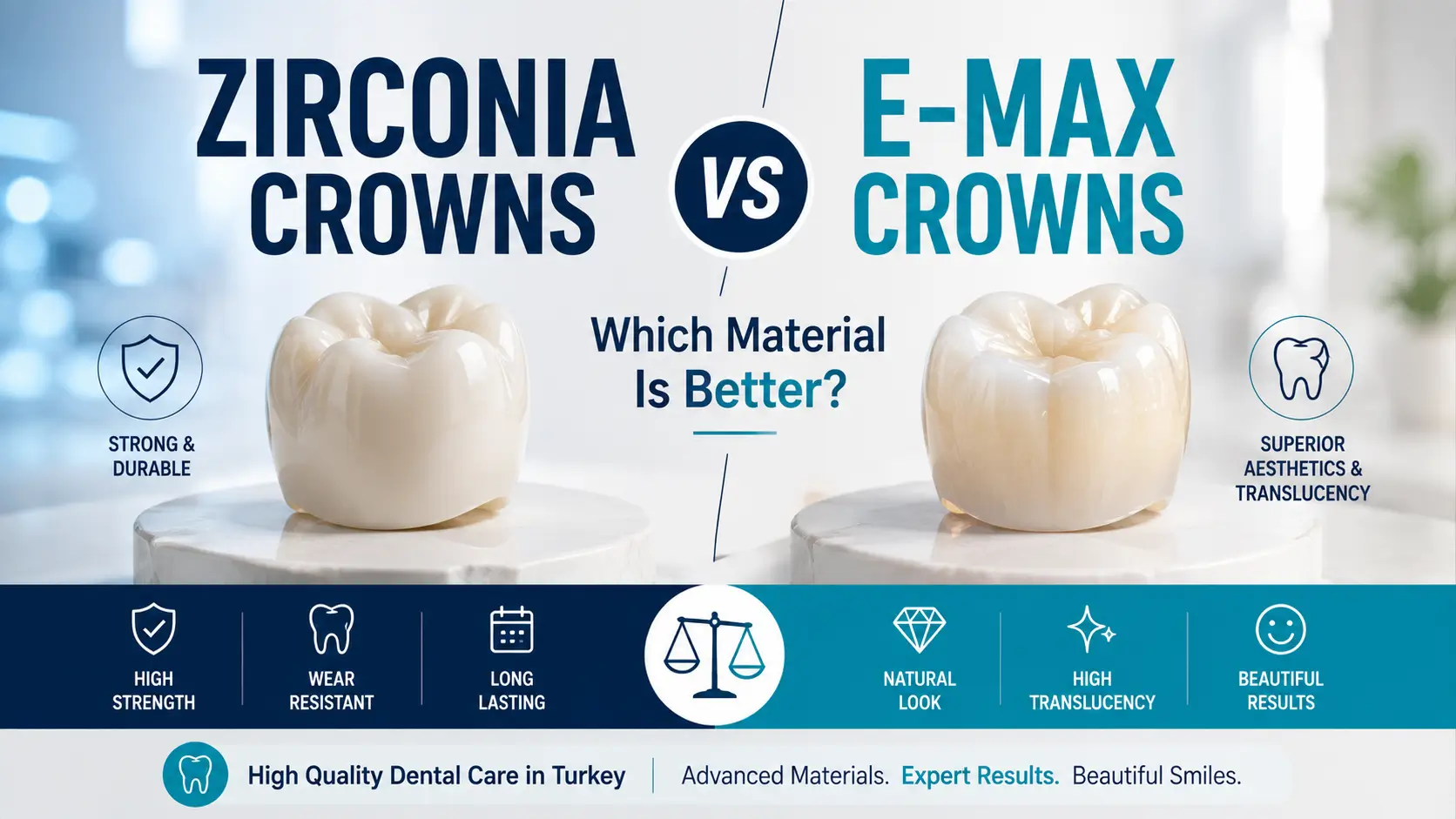
If you’ve been told you need a crown, one of the first practical decisions is which material it should be made from. Zirconia and E-max are the two most commonly recommended options in modern dentistry, and both are genuinely excellent materials — but they’re not interchangeable, and the right choice depends heavily on where the tooth sits in your mouth and what you need it to do. This guide compares the two directly so you can have an informed conversation with your dentist rather than simply picking whichever is quoted first.
Two Leading Crown Materials, Different Strengths
Both zirconia and E-max have largely replaced older metal-based and metal-ceramic crowns in modern practice, mainly because they avoid the dark line at the gumline and the poorer aesthetics associated with older materials. Where they differ from each other is in the balance between strength and translucency — zirconia leans toward maximum strength, while E-max leans toward maximum natural light transmission. Understanding this trade-off is the key to understanding which one suits your specific tooth.
What Zirconia Crowns Are
Zirconia is a highly durable ceramic, milled from a solid block using digital scanning and computer-guided fabrication. It’s exceptionally strong and resistant to chipping and fracture, which has made it the material of choice for back teeth and for patients with a heavy bite or a history of grinding. Modern zirconia has improved significantly in translucency over the past decade, with newer high-translucency formulations narrowing the aesthetic gap with E-max, though it still tends to be slightly more opaque overall.
What E-max Crowns Are
E-max is a lithium disilicate glass-ceramic prized specifically for how closely it mimics the way light passes through natural tooth enamel. It’s the material most often recommended for front teeth, where appearance matters most, since its translucency creates a depth and glow that’s harder to achieve with a more opaque material. E-max is still a strong, durable material for normal biting forces, but it doesn’t quite match zirconia’s raw fracture resistance under heavy chewing loads.
Front Teeth vs Back Teeth: Why Position Matters
This is the single biggest factor in choosing between the two. Front teeth are visible every time you smile or speak, and they experience relatively lighter biting forces — mostly biting and tearing rather than the heavy grinding pressure of molars. This makes E-max’s aesthetic advantage highly valuable here, since strength is less of a limiting factor. Back teeth do the heavy work of chewing and grinding food, are rarely visible, and are more exposed to fracture risk over years of use — which is exactly why zirconia’s superior strength is usually the priority in this position, even though its aesthetics are slightly less refined.
Strength and Durability Compared
Zirconia is measurably stronger under lab testing and in real-world use, making it the more forgiving choice for patients who grind their teeth, have a naturally strong bite, or need a crown on a molar that does significant daily chewing work. E-max, while still robust for normal use, is more likely to chip or crack under sustained heavy force compared with zirconia, which is why it’s rarely recommended as a first choice for back teeth in patients with bruxism or a heavy bite.
Natural Appearance and Colour Match
E-max generally has the edge in natural light transmission and colour blending, particularly in situations where the crown sits next to natural teeth and needs to disappear seamlessly. High-translucency zirconia has closed much of this gap in recent years and can produce excellent aesthetic results, but for the most demanding front-tooth cases — particularly single crowns next to natural teeth rather than a full symmetrical set — E-max is still frequently the preferred recommendation among cosmetically focused dentists.
Cost Differences
Pricing between the two is often broadly similar, though this varies by clinic and lab. Some clinics price E-max slightly higher for front-tooth aesthetic cases given the additional shade-layering work involved, while zirconia can sometimes work out marginally more cost-effective for back teeth given more standardised, high-volume milling processes. As always, it’s worth requesting a clear, material-specific quote rather than a generic “premium crown” price that doesn’t specify which material is actually being used.
Which Cases Suit Zirconia
- Back teeth (molars and premolars) that handle significant chewing force.
- Patients with bruxism (teeth grinding) or a naturally strong bite.
- Cases needing maximum long-term fracture resistance.
- Full-arch or multi-unit bridge work where structural strength across several teeth matters most.
Which Cases Suit E-max
- Front teeth (incisors and canines) where appearance is the top priority.
- Single crowns positioned next to natural, unrestored teeth that need close colour and translucency matching.
- Patients without significant grinding habits.
- Cases where a natural, glowing, enamel-like finish matters more than maximum raw strength.
Combining Both in a Full Mouth Plan
Many full mouth or multi-crown treatment plans use both materials deliberately — zirconia on the back teeth for strength, E-max on the front teeth for appearance. This isn’t a compromise; it’s usually the most sensible approach, matching each material to the job it’s genuinely best suited for rather than using one material across every tooth for the sake of simplicity. With 32 years of dental experience planning mixed-material cases, this kind of tailored approach consistently produces better long-term results than a one-size-fits-all crown material chosen purely for convenience.
How the Decision Is Actually Made in Practice
A thorough assessment looks at more than just which tooth is being treated. Your dentist should also weigh your bite pattern across the whole mouth, whether you already show signs of wear on your natural teeth, and how the crown will interact with the teeth it bites against. Two patients needing a crown on the same tooth position can reasonably end up with different material recommendations once these individual factors are properly taken into account, which is exactly why a generic “we only offer one crown material” clinic is worth being cautious of.
What Happens If the Wrong Material Is Used
Using E-max on a heavily grinding patient’s molar, or using standard zirconia where a highly demanding aesthetic match was needed on a front tooth, doesn’t necessarily mean instant failure — but it does raise the odds of an earlier-than-expected problem, whether that’s a chip, a fracture, or simply a result that never quite blends in the way it should have. This is why the material decision deserves a proper conversation at the planning stage, rather than being treated as a minor technical detail settled after the fact.
A Note on Newer Zirconia Formulations
It’s worth knowing that “zirconia” isn’t a single fixed material — there are several generations and formulations, ranging from the earliest high-strength, more opaque versions to newer ultra-translucent zirconia designed specifically to close the aesthetic gap with E-max. If a clinic recommends zirconia for a front tooth, it’s reasonable to ask specifically which generation is being used, since older, more opaque formulations behave quite differently from the newer aesthetic zirconia now available in many labs.
What to Ask Before Choosing a Crown Material
Before committing, it’s worth asking your dentist to explain their specific reasoning for the material recommended on your tooth — not just which is more popular, but why it fits your bite, your grinding history, and the visibility of that particular tooth. It’s also reasonable to ask to see photographs of similar past cases in each material, ideally viewed in natural light, so you can judge the aesthetic difference for yourself rather than relying on a description alone.
A Simple Rule of Thumb
If you need a straightforward way to think about it: strength-critical, out-of-sight teeth generally favour zirconia, while appearance-critical, highly visible teeth generally favour E-max — and most full mouth or multi-crown plans end up using a sensible mix of both rather than treating it as an all-or-nothing choice across your whole smile.
Why This Decision Is Worth Getting Right the First Time
Because crowns are designed to last a decade or more, the material decision made on day one has consequences that play out for years afterward. Redoing a crown earlier than necessary because the wrong material was used for a heavy-grinding molar, or because a front tooth never quite matched its neighbours, is far more disruptive and costly than taking the time to get the recommendation right at the planning stage. This is exactly why the assessment before treatment matters as much as the treatment itself.
Getting a Personalised Recommendation
If you need one or more crowns and aren’t sure which material is right for your case, send us details of which teeth need treatment, along with any history of teeth grinding or previous crown or filling work. We’ll come back with a clear, tooth-by-tooth recommendation and an honest cost comparison so you understand exactly why each material is being suggested.